Key numbers
- All-in price = total bill ÷ kWh used
- Energy-only price = (bill − fixed charges) ÷ kWh
- 18.16¢/kWh: US residential average (EIA, August 2026)
- 16.00¢/kWh and $136.84: US average price and bill (EIA, 2023 data)
On this page
How to use the Cost per kWh Calculator
- 1Enter your numbersFill in total bill amount ($), electricity used (kwh on the bill) (kWh) and fixed monthly charges (customer/service charge) ($). Every field starts with a typical value you can overwrite.
- 2Check the assumptionsThe all-in price includes fixed charges and taxes, so it falls as you use more. Use the energy-only price to value savings from using less.
- 3Read the resultsThe calculator shows all-in price per kwh, energy-only price (without fixed charges), in dollars and versus us average, and updates as you type.
- 4Use the resultCompare it with your bill, a quote or a product spec sheet before you buy or install anything.
Results update as you type. Back to the calculator ↑
This cost per kWh calculator finds what you really pay for electricity. Enter the total from your bill, the kWh you used and any fixed monthly charge. It returns your all-in price per kWh, your energy-only price and how your rate compares with the US average. Use the result in every other electricity calculator for accurate costs.
How cost per kWh is calculated
- All-in price (¢/kWh) = total bill ÷ kWh used × 100
- Energy-only price (¢/kWh) = (total bill − fixed charges) ÷ kWh used × 100
- Versus US average = (all-in price − 18.2) ÷ 18.2 × 100%, using the 18.16¢ August 2026 average from EIA Table 5.6.A
A fixed charge (also called a customer, service or basic charge) is the flat monthly fee you pay regardless of how much electricity you use.
Worked example with the default inputs
Defaults: a $152 bill, 850 kWh used and a $12 fixed customer charge.
- All-in price: 152 ÷ 850 = $0.1788 → 17.88¢/kWh
- Energy-only price: (152 − 12) ÷ 850 = $0.1647 → 16.47¢/kWh
- In dollars: $0.1788 per kWh
- Versus the US average of 18.2¢: (17.88 − 18.2) ÷ 18.2 = about 2% lower
Cost per kWh examples
The same formula applied to other bills, each with a $12 fixed charge.
| Bill total | kWh used | All-in price | Energy-only price | vs. US average |
|---|---|---|---|---|
| $100 | 500 | 20.00¢ | 17.60¢ | +10% |
| $152 | 850 | 17.88¢ | 16.47¢ | −2% |
| $200 | 1,200 | 16.67¢ | 15.67¢ | −8% |
| $300 | 1,500 | 20.00¢ | 19.20¢ | +10% |
Notice the first and last rows share the same all-in price but have different energy rates. Fixed charges weigh more heavily on small bills.
US benchmarks from EIA
Monthly prices come from the Electric Power Monthly; annual use and bill figures from EIA Table 5A.
| Measure | Value | Data period |
|---|---|---|
| Average residential price | 18.16¢/kWh | August 2026 |
| Average residential price | 16.00¢/kWh | 2023 (annual) |
| Average monthly use | 855 kWh | 2023 |
| Average monthly bill | $136.84 | 2023 |
What affects your price per kWh
Fixed charges. The larger the customer charge, the bigger the gap between all-in and energy-only prices, especially in low-use months.
Tiered rates. Some utilities charge more per kWh above a monthly threshold. Your marginal price may be higher than the average this calculator shows.
Time-of-use plans. Prices differ by hour. Calculate peak and off-peak prices separately if your bill splits them.
Season and fuel costs. Fuel and purchased-power adjustments change month to month, so check several bills. EIA explains how generation, transmission and distribution each feed into the price (factors affecting electricity prices).
Step-by-step: reading your electric bill
- Find the billing period dates and make sure the kWh and dollar total cover the same days.
- Find the total amount due for electricity only. If the bill also includes gas, water or past balances, leave those out.
- Find the kWh used, usually shown as the difference between two meter readings.
- Find the fixed monthly charge, often called a customer charge, service charge or basic charge.
- Enter all three numbers above and note both prices.
For the most reliable rate, repeat this for three to twelve bills and average the results. Summer and winter rates can differ, and some utilities change prices partway through the year.
All-in price vs energy charge: which to use
Use the all-in price when you want to know what your electricity costs on average, for example to compare utilities or budget for the year. Use the energy-only price when you want to know what an extra kWh, or a kWh saved, is worth. That is the right number for solar savings, EV charging costs and appliance upgrades, because the fixed charge does not change when your usage does.
History of paying per kilowatt-hour
Paying a price per kWh is younger than electric light. The earliest commercial electricity in the 1880s had predictable loads, so customers were commonly billed by the number of lamps or motors installed (electricity meter history). Edison’s Pearl Street Station, which began service on 4 September 1882 with about 85 customers, included a consumption meter in its system; Edison’s version was electrochemical, using an electrolytic cell to total the current used. True energy billing became practical once recording watt-hour meters appeared in 1889 (Bláthy at Ganz, and Elihu Thomson), followed by Shallenberger’s induction meter for Westinghouse in 1894, the design behind the spinning-disc meters still found on some homes.
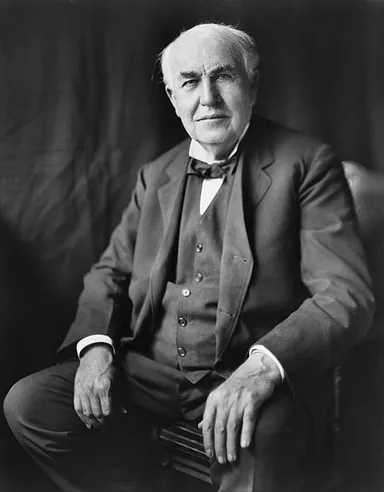
| Year | Milestone | Source |
|---|---|---|
| 1882 | Edison’s Pearl Street Station in New York begins supplying about 85 customers on 4 September | IEEE ETHW |
| 1882 | C. William Siemens proposes the watt as the unit of power to the British Association | Watt (unit) |
| 1889 | Bláthy (Ganz Works) and Elihu Thomson introduce recording watt-hour meters | Electricity meter |
| 1894 | Shallenberger’s induction watt-hour meter sets the modern meter design | Electricity meter |
| 1960 | The 11th CGPM adopts the watt as the SI unit of power | Watt (unit) |
References
- Thompson, A. & Taylor, B. N. (2008). Guide for the Use of the International System of Units (SI). NIST Special Publication 811. doi:10.6028/NIST.SP.811e2008
- U.S. Energy Information Administration. Electric Power Monthly, Table 5.6.A. eia.gov
How to use your rate
- Enter your all-in price into the electricity cost calculator to cost any device.
- Use it with the kWh calculator or the electricity usage calculator to see what each appliance adds to your bill.
- For EV owners, plug the rate into our guide on the cost to charge an electric car.
To understand the unit on your bill, read what a kilowatt-hour is. Knowing your real rate also tells you how much rooftop solar and other renewable energy options could save you.
FAQ
Frequently asked questions
How do I calculate cost per kWh from my bill?
Divide the total bill amount by the kWh used in the same billing period. A $152 bill for 850 kWh is 152 ÷ 850 = $0.1788, or 17.88 cents per kWh. That is your all-in price, including fixed charges and taxes.
What is the difference between the all-in and energy-only price?
The all-in price spreads fixed monthly charges over every kWh, so it falls as you use more. The energy-only price removes those fixed charges and shows what each extra kWh really costs. Use the energy-only price to value savings from solar or efficiency.
What is the average cost per kWh in the US?
EIA's Electric Power Monthly put the US average residential price at 18.16 cents per kWh in August 2026. For the full year 2023, EIA's average monthly bill table shows 16.00 cents per kWh and an average bill of $136.84.
What is my kWh rate?
Your kWh rate is what you pay per kilowatt-hour. Divide the electricity total on your bill by the kWh used in the same period to get your all-in rate. Subtract fixed monthly charges first to get your energy-only rate. The US average was 18.16 cents per kWh in August 2026 (EIA).
Where do I find the kWh on my electric bill?
Look for a line labelled usage, energy used, kWh used or meter reading difference. It is usually near the meter readings or the usage chart. Use the kWh for the same billing period as the dollar total.
Why is my cost per kWh higher in low-usage months?
Fixed customer or service charges stay the same each month. When you use fewer kWh, those fixed dollars are divided among fewer units, so the all-in price per kWh rises even if the energy rate did not change.
Should I include taxes and fees?
For the all-in price, yes: use the bill total. For the energy-only price, subtract the fixed monthly charges only. Per-kWh riders and taxes that scale with usage belong in the energy price, since they rise and fall with each kWh you use.
5 Sources
Last updated October 25, 2026. Part of our renewable energy toolkit. Found an error? Tell us.