Key numbers
- 1 kW = 1,000 W; 1 MW = 1,000 kW
- 1.5 kW = 1,500 W, about 2.01 hp or 5,118 BTU/h
- 1 hp ≈ 0.7457 kW (mechanical horsepower)
- 1 kW ≈ 3,412 BTU/h
On this page
- How to use the kW to Watts
- How to convert kilowatts to watts
- kW to W conversion table
- Watts to kW table
- Kilowatt vs watt: what’s the difference?
- kW vs kWh: the mix-up to avoid
- Where you see kW and W
- Step-by-step: converting any power rating
- Common kW ratings around the home
- History: James Watt and the horsepower
- References
- Quick mental math
- Frequently asked questions
How to use the kW to Watts
- 1Enter your numbersFill in kilowatts (kW). Every field starts with a typical value you can overwrite.
- 2Check the assumptions1 kW = 1,000 W. For the reverse, divide watts by 1,000. Kilowatts (kW) are power; kilowatt-hours (kWh) are energy.
- 3Read the resultsThe calculator shows watts, megawatts, horsepower (mechanical), btu per hour and energy if run for 1 hour, and updates as you type.
- 4Use the resultCompare it with your bill, a quote or a product spec sheet before you buy or install anything.
Results update as you type. Back to the calculator ↑
This kilowatt to watt converter changes kW to W instantly and shows the same power in megawatts, horsepower and BTU per hour. Type a value in kilowatts; for the reverse (watts to kW), divide by 1,000 or read across the table below.
How to convert kilowatts to watts
The kilo- prefix in the International System of Units (SI) means one thousand (NIST SI prefixes), so:
- Watts = kilowatts × 1,000
- Kilowatts = watts ÷ 1,000
- Megawatts = kilowatts ÷ 1,000
- Horsepower = kilowatts ÷ 0.7457 (1 mechanical hp ≈ 745.7 W, NIST SP 811 Appendix B)
- BTU per hour = kilowatts × 3,412.14 (EIA rounds this to 3,412)
Worked example with the default value
- Input: 1.5 kW (a typical space heater or hair dryer rating)
- Watts: 1.5 × 1,000 = 1,500 W
- Megawatts: 1.5 ÷ 1,000 = 0.0015 MW
- Horsepower: 1.5 ÷ 0.7457 = 2.012 hp
- BTU/h: 1.5 × 3,412.14 = 5,118 BTU/h
- Energy if run for one hour: 1.5 kWh
kW to W conversion table
| Kilowatts (kW) | Watts (W) | Horsepower (hp) | BTU/h |
|---|---|---|---|
| 0.1 kW | 100 W | 0.13 | 341 |
| 0.5 kW | 500 W | 0.67 | 1,706 |
| 1 kW | 1,000 W | 1.34 | 3,412 |
| 1.5 kW | 1,500 W | 2.01 | 5,118 |
| 2 kW | 2,000 W | 2.68 | 6,824 |
| 5 kW | 5,000 W | 6.71 | 17,061 |
| 7.2 kW | 7,200 W | 9.66 | 24,567 |
| 10 kW | 10,000 W | 13.41 | 34,121 |
| 100 kW | 100,000 W | 134.1 | 341,214 |
| 1,000 kW (1 MW) | 1,000,000 W | 1,341 | 3,412,140 |
Watts to kW table
| Watts | Kilowatts |
|---|---|
| 60 W | 0.06 kW |
| 400 W | 0.4 kW |
| 1,200 W | 1.2 kW |
| 3,500 W | 3.5 kW |
| 7,680 W | 7.68 kW |
Kilowatt vs watt: what’s the difference?
A kilowatt and a watt measure the same thing, power, at different scales: 1 kW is 1,000 W. Watts suit small devices such as a 10 W LED bulb; kilowatts suit larger loads such as a 7.2 kW EV charger or a 10 kW solar system. Neither is energy; for that you need kilowatt-hours.
kW vs kWh: the mix-up to avoid
Kilowatts measure power, how fast energy flows right now. Kilowatt-hours measure energy, the total over time. A 1.5 kW heater uses 1.5 kWh each hour it runs, so after 4 hours it has used 6 kWh. So 1 kilowatt does not equal 1 kilowatt-hour; it equals 1 kWh only after one hour of use. To get energy from power and time, use the watts to kWh calculator. For a full explanation, read what is a kilowatt-hour.
Where you see kW and W
- Appliances list watts on the label: kettles, microwaves and heaters often run between 1,000 and 3,000 W.
- Solar panels are rated in watts per panel and kilowatts per system (kW DC).
- EV chargers are rated in kW. Level 2 home chargers are a few kW; DC fast chargers run much higher.
- Power plants and wind turbines use megawatts (MW) and gigawatts (GW), the scale of utility renewable energy projects.
Pro tip
Step-by-step: converting any power rating
- Find the rating on the label or spec sheet and note its unit (W, kW, MW, hp or BTU/h).
- Convert to watts first: kW × 1,000, MW × 1,000,000, hp × 745.7, BTU/h ÷ 3.41214.
- Convert from watts to the unit you need by reversing the same factor.
- To find energy, multiply the power by the hours of use and divide by 1,000 for kWh.
Common kW ratings around the home
Power ratings show up on almost every large appliance and energy system. Kitchen appliances and space heaters usually list watts on the nameplate, while central air conditioners and furnaces list BTU/h or tons. Solar inverters, home batteries and EV chargers list kW because their ratings run into the thousands of watts. When you compare a battery’s kW rating with its kWh capacity, the kW tells you how much it can power at once and the kWh tells you for how long. A battery rated 5 kW and 10 kWh, for example, can run a 5 kW load for about two hours.
History: James Watt and the horsepower
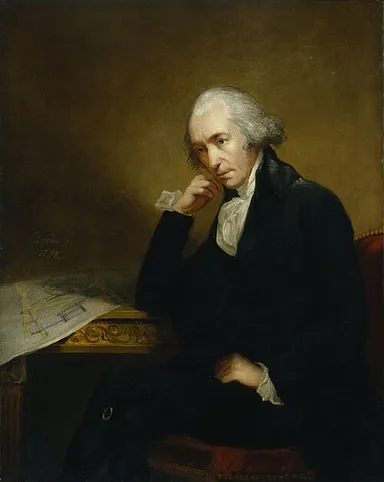
The two power units on this page share a history. James Watt, the Scottish engineer who improved the steam engine, needed a way to sell engines to customers who used horses. He found by experiment in 1782 that a mill horse could do about 32,400 foot-pounds of work per minute, and Watt and Matthew Boulton standardised the figure at 33,000 ft·lbf per minute, the mechanical horsepower still used today (Horsepower). That works out to about 745.7 W. A century later, in 1882, C. William Siemens proposed naming the electrical unit of power after Watt himself (Watt (unit)), and the watt became the SI unit of power in 1960.
| Year | Milestone |
|---|---|
| 1782 | Watt measures a mill horse at about 32,400 ft·lbf/min |
| 1882 | Siemens proposes the watt as the electrical unit of power |
| 1960 | 11th CGPM adopts the watt into the SI |
References
- Thompson, A. & Taylor, B. N. (2008). Guide for the Use of the International System of Units (SI). NIST Special Publication 811. doi:10.6028/NIST.SP.811e2008
- BIPM (2019). The International System of Units (SI Brochure), 9th edition. Bureau International des Poids et Mesures. bipm.org
Quick mental math
Moving between watts and kilowatts is just a decimal shift of three places. To go from kW to W, move the decimal point three places right: 2.5 kW becomes 2,500 W. To go from W to kW, move it three places left: 850 W becomes 0.85 kW. The same shift takes you from kW to MW and from MW to GW, which is how utility-scale plants are reported.
FAQ
Frequently asked questions
How many watts are in a kilowatt?
There are exactly 1,000 watts in a kilowatt. The prefix kilo means one thousand in the International System of Units, so 2 kW is 2,000 W and 0.5 kW is 500 W.
How do I convert watts to kW?
Divide watts by 1,000. A 1,800 watt microwave is 1.8 kW, a 400 watt solar panel is 0.4 kW, and a 7,680 watt Level 2 EV charger is 7.68 kW.
What is the difference between kW and kWh?
A kilowatt (kW) is power, the rate of energy use. A kilowatt-hour (kWh) is energy, 1 kW sustained for one hour. A 2 kW heater running 3 hours uses 6 kWh. Your electricity bill charges for kWh.
How many kW is 1 horsepower?
One mechanical horsepower equals about 0.7457 kW, or 745.7 watts. To convert kW to horsepower, divide by 0.7457; 1.5 kW is about 2.01 hp. Electric motors are often rated in both.
How many watts is a 10 kW solar system?
A 10 kW solar system is rated at 10,000 watts of peak DC output, for example twenty-five 400 watt panels. Its actual output varies through the day and is usually below the rating, which is why annual production is measured in kWh.
How do I convert kilowatts to watt-hours?
Multiply kilowatts by the hours of use to get kWh, then by 1,000 for watt-hours. A 1.5 kW heater running 2 hours uses 3 kWh, or 3,000 Wh. Power alone has no watt-hours; you always need a time.
7 Sources
Last updated October 25, 2026. Part of our renewable energy toolkit. Found an error? Tell us.