Quick answer
Geothermal energy is heat from inside the Earth, used to generate electricity or to heat and cool buildings. Power plants tap steam or hot water at roughly 300°F to 700°F (EIA). US geothermal plants ran at a 65.9% capacity factor in 2025, the steadiest of any renewable, though they supply under 1% of US electricity.
Key facts
- 65.9%: average capacity factor of US geothermal plants in 2025, highest of any renewable (EIA).
- About 3,969 MW of US geothermal power capacity as of 2024, 72% of it in California (US Geothermal Market Report).
- $0.060/kWh: global average cost of new geothermal power in 2024, down 16% from 2023 (IRENA).
- 1904: the first geothermal power plant ran in Italy, using natural steam (EIA).
- 90 GW of US enhanced geothermal capacity is possible by 2050 with aggressive cost cuts (DOE).
On this page
- What is geothermal energy?
- How does a geothermal power plant work?
- What are the 3 types of geothermal power plants?
- How much electricity does geothermal produce?
- What is enhanced geothermal (EGS)?
- Geothermal heat pumps vs geothermal power plants: what’s the difference?
- What are the advantages and disadvantages of geothermal energy?
- How much does geothermal energy cost?
- Where is geothermal energy found?
- How does Iceland use geothermal energy?
- Is geothermal energy sustainable?
- History of geothermal energy
- Scientific references
- Bottom line
- Frequently asked questions
Geothermal energy is the one renewable source that runs around the clock regardless of weather. It powers turbines in California and Nevada, heats whole districts in Idaho and quietly warms and cools homes through ground-source heat pumps. This guide explains what geothermal energy is, how each type of geothermal power plant works, what enhanced geothermal could add and how the numbers compare with other sources. It is part of our guide to renewable energy.
What is geothermal energy?
Geothermal energy is heat from inside the Earth. The word comes from the Greek “geo” (earth) and “therme” (heat), and the heat is produced mainly by the slow radioactive decay of elements in rock, plus heat left from the planet’s formation.
The Earth gets hotter with depth. In most places the increase is gradual, but along tectonic plate boundaries, volcanic zones and hot spots, very hot rock and water sit close enough to the surface to reach with wells. That is where geothermal power plants are built.
Geothermal energy is used in three main ways:
- Electricity generation: power plants use steam or hot water from deep reservoirs to spin turbines.
- Direct use: hot water from shallower wells heats buildings, greenhouses, fish farms and district heating networks. Boise, Idaho, has used geothermal district heating since 1892 (DOE).
- Geothermal heat pumps: systems that use the steady temperature of shallow ground to heat and cool buildings.
Geothermal is one of the six main renewable energy sources.
How does a geothermal power plant work?
A geothermal power plant brings steam or hot water up through production wells, uses its heat to spin a turbine and generator, then injects the cooled water back underground. According to the EIA, plants need very hot water or steam, roughly 300°F to 700°F (about 150°C to 370°C), and some wells are as much as 2 miles deep.
The basic process:
- Find a reservoir. Geologists locate hot, permeable rock holding water or steam, using surveys and test wells.
- Drill production wells. Wells reach the reservoir, often thousands of feet down.
- Bring up heat. Steam or hot water rises under its own pressure or with pumps.
- Spin the turbine. Steam, or vapor from a secondary fluid, drives a turbine connected to a generator.
- Condense and cool. Exhaust steam is condensed in a cooling system.
- Reinject. Cooled water goes back into the reservoir through injection wells, maintaining pressure and limiting emissions.
What are the 3 types of geothermal power plants?
The three types of geothermal power plants are dry steam, flash steam and binary cycle. Which one is used depends on the temperature and state of the underground fluid.
| Plant type | How it works | Resource it suits | Notes |
|---|---|---|---|
| Dry steam | Steam from the reservoir goes straight to the turbine | Rare reservoirs that produce mostly steam | Oldest design; the first plant in Italy in 1904 used natural steam (EIA) |
| Flash steam | High-pressure hot water “flashes” partly to steam when its pressure drops at the surface; the steam spins the turbine | High-temperature water reservoirs | The most common type (EIA) |
| Binary cycle | Hot geothermal water heats a second fluid with a lower boiling point, which vaporizes and spins the turbine | Moderate-temperature water | Closed loop; the EIA says it produces no air emissions |
Dry steam plants
Dry steam plants pipe steam directly from the reservoir to the turbine. They are the simplest design, but natural dry steam fields are rare.
Flash steam plants
Flash steam plants are the most common type. Hot water under high pressure rises up the well; when the pressure drops at the surface, part of it instantly turns, or “flashes,” into steam. A separator sends the steam to the turbine and the leftover water back underground. Some plants flash the water twice to squeeze out more energy.
Binary cycle plants
Binary plants keep the geothermal water in a closed loop. It passes through a heat exchanger and warms a working fluid, such as an organic compound with a low boiling point, which turns into vapor and drives the turbine. Because the geothermal fluid never touches the turbine or the air, binary plants can use cooler resources and avoid air emissions. Most new geothermal development uses binary technology for this reason.
Why reinjection matters
Pumping cooled water back underground keeps reservoir pressure up and returns minerals and dissolved gases to the rock. It is the main reason a well-managed geothermal field can run for decades.
How much electricity does geothermal produce?
Geothermal supplied less than 1% of US utility-scale electricity in 2025, about 2% of US renewable generation (EIA). Its output is small but extremely steady.
| Measure | Value | Source and data year |
|---|---|---|
| Share of US utility-scale generation | less than 1% | EIA, 2025 |
| Share of US renewable generation | about 2% | EIA, 2025 |
| US average capacity factor | 65.9% | EIA, 2025 |
| US installed nameplate capacity | about 3,969 MW | US Geothermal Market Report, 2024 |
| California’s share of US capacity | 72% (about 2,868 MW, 53 plants) | US Geothermal Market Report, 2024 |
| Nevada capacity | about 892 MW, 32 plants | US Geothermal Market Report, 2024 |
| Nevada’s share of US geothermal generation | 25% (second after California) | EIA, 2024 |
| Global average cost of new projects | $0.060/kWh, down 16% | IRENA, 2024 |
That 65.9% capacity factor (EIA Electric Power Monthly, Table 6.07.B) is the key number. It means a geothermal plant delivers far more energy per megawatt of capacity than solar (24.0%) or wind (33.8%). A 1 MW geothermal plant at the 2025 average produces about 5,770 MWh a year, versus about 2,100 MWh for 1 MW of solar PV.
What is enhanced geothermal (EGS)?
An enhanced geothermal system (EGS) creates an artificial reservoir by injecting fluid into hot, dry rock to open fractures, then circulates water through those fractures to collect heat. It could make geothermal power possible far beyond today’s natural hot spots.
Conventional geothermal needs three things together: heat, water and permeable rock. Hot rock is common at depth, but water and permeability are not. EGS supplies the missing pieces by engineering them, borrowing drilling and stimulation methods from the oil and gas industry, including horizontal wells.
The idea was first proven at Fenton Hill, New Mexico, in the 1970s (see the history section below). The 2006 MIT-led study The Future of Geothermal Energy examined what it would take for EGS and other unconventional resources to supply 100,000 MWe of US base-load capacity by 2050 (MIT/INL, 2006). The DOE’s 2022 Enhanced Geothermal Shot analysis found potential for 90 GW of US geothermal electricity capacity by 2050, if aggressive cost reductions are achieved. For scale, that is more than 20 times today’s installed US geothermal capacity. The main challenges are drilling cost, keeping fractures productive over time and managing induced seismicity, the small earthquakes that stimulating rock can trigger, which Majer et al. (2007) reviewed in detail.
Other next-generation designs include closed-loop systems, which circulate fluid through sealed underground pipes without touching the rock, and superhot rock projects that aim for much higher temperatures at greater depth.
Geothermal heat pumps vs geothermal power plants: what’s the difference?
A geothermal power plant makes electricity from deep, very hot reservoirs, while a geothermal heat pump moves heat between a building and the shallow ground to provide heating and cooling. Heat pumps work almost anywhere; power plants need special geology.
| Feature | Geothermal power plant | Geothermal (ground-source) heat pump |
|---|---|---|
| Purpose | Generate electricity | Heat and cool buildings, often hot water |
| Depth | Often thousands of feet, some wells up to 2 miles (EIA) | A few feet to a few hundred feet |
| Temperature used | Roughly 300°F to 700°F (EIA) | The fairly steady temperature of shallow ground |
| Where it works | Limited regions, mostly the western US | Almost anywhere |
| Who owns it | Utilities and developers | Homeowners, schools, businesses |
| Energy input | Produces power | Uses electricity to move heat |
A heat pump uses the ground as a heat source in cold weather and a heat sink in warm weather (DOE). Because ground temperatures are milder than air temperatures in winter and summer, ground-source systems move heat efficiently. The DOE’s GeoVision study (2019) found potential for up to 28 million geothermal heat pumps and more than 17,000 district heating systems in the US by 2050. Our geothermal heat pump guide covers costs and sizing for homes, including each stage of geothermal heat pump installation.
What are the advantages and disadvantages of geothermal energy?
Geothermal’s biggest advantage is constant, weather-independent output with a small land footprint. Its biggest disadvantages are geographic limits and the high cost and risk of drilling.
| Advantages | Disadvantages |
|---|---|
| Runs 24/7; 65.9% US capacity factor (EIA, 2025) | Only practical where heat is accessible |
| Very low emissions, near zero for binary plants | High upfront drilling cost and exploration risk |
| Small land use; the DOE says it uses less land than many sources over 30 years | Some plants release hydrogen sulfide and CO2 |
| Costs falling: $0.060/kWh average in 2024 (IRENA) | EGS stimulation can trigger minor earthquakes |
| Can provide heat as well as power | Reservoirs need careful management |
For how geothermal compares with other clean sources, see clean energy and hydroelectric power, the other main dispatchable renewable.
How much does geothermal energy cost?
New geothermal power cost a global average of $0.060/kWh in 2024, down 16% from $0.072/kWh in 2023 (IRENA). That is above onshore wind and solar but below offshore wind and bioenergy.
Most of the cost is upfront: exploration, drilling and plant construction. Once built, fuel is free and operating costs are low, so long plant lives and high capacity factors bring the cost per kWh down. Drilling is the single biggest risk, because a well that misses a productive zone can cost millions of dollars with no output.
For homeowners, the relevant cost is a ground-source heat pump, which costs more to install than an air-source heat pump but uses less electricity. To compare heating fuels, convert units with the BTU to kWh converter and price the electricity with the electricity cost calculator.
Where is geothermal energy found?
Geothermal resources good enough for power plants are found where hot rock lies close to the surface: along tectonic plate boundaries, near volcanoes and above hot spots. In the United States that means mainly the West, above all California and Nevada.
According to the 2025 US Geothermal Market Report, California hosts 53 of the country’s 99 geothermal power plants, with about 2,868 MW of nameplate capacity, or 72% of the US total. Nevada has 32 plants and about 892 MW. EIA data show Nevada produced 25% of US utility-scale geothermal electricity in 2024, second only to California. Two companies, Ormat and Calpine, together own about 69% of installed US capacity, according to the same report.
Outside those hot zones, deep drilling can still reach useful heat, which is where enhanced geothermal comes in. Lower-temperature resources, defined by the DOE as below 300°F, can still serve direct uses such as greenhouses and district heating. Engineers often summarize this with the Lindal diagram, first published by Icelandic engineer Baldur Lindal in 1973, which matches fluid temperature to suitable uses: electricity at the hot end, then industrial drying, space heating, greenhouses and fish farming as the temperature falls. Worldwide direct use of geothermal heat is tracked every five years in reviews such as Lund and Toth (2021). And the shallow ground used by heat pumps is available almost everywhere.
Signs of geothermal activity at the surface include:
- Hot springs, where heated groundwater rises naturally.
- Geysers, which periodically erupt steam and hot water.
- Fumaroles, vents that release steam and volcanic gases.
- Mud pots, where acidic hot water breaks down surrounding rock.
How does Iceland use geothermal energy?
Iceland is the country that heats about 90% of its homes with geothermal energy, mostly through district heating networks that pipe hot water from wells into buildings (Ragnarsson et al., Iceland country update, 2018). Geothermal plants also supply roughly 29% of its electricity, with hydropower providing almost all of the rest (Orkustofnun data via Energy in Iceland).
Iceland sits on the Mid-Atlantic Ridge, where the North American and Eurasian plates pull apart, so hot rock lies unusually close to the surface. Reykjavík’s district heating system is one of the largest in the world, and geothermal water also melts snow on pavements, warms greenhouses and fills swimming pools. The largest Icelandic plant, Hellisheiði, has about 303 MW of electric capacity (Orkustofnun, 2020). Because so little of the country’s energy comes from fossil fuels, Iceland is the clearest real-world example of what geothermal can do where the geology allows it; most countries cannot copy it directly.
Is geothermal energy sustainable?
Geothermal energy is sustainable when reservoirs are managed so that heat and water are not removed faster than they are replaced. The Earth’s heat is effectively limitless, but an individual reservoir is not.
Early geothermal fields taught operators this lesson: when steam and water were extracted without being put back, reservoir pressure fell and output declined. Modern plants reinject cooled fluid, monitor pressure and temperature, and balance production across wells. Binary plants, which keep fluid in a closed loop, are the easiest to run sustainably.
On land use, the DOE notes that over a 30-year period geothermal power plants use less land than many other sources. Emissions are low: binary plants release almost nothing to the air, while flash and dry steam plants vent small amounts of gases that were dissolved in the reservoir fluid. Compared with burning coal or gas, geothermal’s lifetime emissions are very small, which is why it counts as both renewable and clean energy.
History of geothermal energy
People have bathed in and cooked with hot springs for thousands of years, but turning the Earth’s heat into electricity began in Tuscany. At Larderello, Italy, where the boric-acid industry already used natural steam vents, the world’s first geothermal electricity was produced from dry steam in 1904 (EIA). Commercial generation followed in 1913 (EBSCO), and the Larderello field still produces power more than a century later.
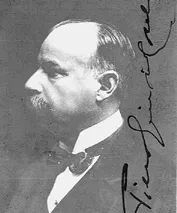
The next big step came in New Zealand. Wairakei, whose first generator was commissioned on November 15, 1958, was the first plant built to use wet steam, the mix of steam and hot water that most reservoirs actually produce (ThinkGeoEnergy). That opened the way for the flash-steam plants that dominate the industry today. In the US, Pacific Gas and Electric’s 10 MW unit at The Geysers in California became the first commercial-scale geothermal development in 1960 (EIA).
The 1970s energy crisis pushed geothermal in new directions. Operators began reinjecting spent fluid in 1970 to extend reservoir life, and in 1974 Los Alamos scientists started building the first hot dry rock reservoir at Fenton Hill, New Mexico, the forerunner of today’s enhanced geothermal systems (Brown et al., 2012). It was tested in 1978 and generated electricity in 1980, the same year the first commercial-scale US binary plant started in California’s Imperial Valley (EIA).
| Year | Milestone | Source |
|---|---|---|
| 1892 | Boise, Idaho, starts geothermal district heating | DOE |
| 1904 | First geothermal electricity, from dry steam at Larderello, Italy | EIA |
| 1913 | Larderello begins commercial power generation | EBSCO |
| 1958 | Wairakei, New Zealand, commissions its first generator, the first wet-steam plant | ThinkGeoEnergy |
| 1960 | 10 MW PG&E unit at The Geysers: first US commercial-scale plant | EIA |
| 1970 | Reinjection of spent geothermal water begins | EIA |
| 1974 | Hot dry rock reservoir work begins at Fenton Hill, New Mexico | EIA |
| 1980 | First US commercial-scale binary plant, Imperial Valley, California | EIA |
| 2006 | MIT-led panel publishes The Future of Geothermal Energy on EGS | MIT/INL |
| 2019 | DOE publishes the GeoVision analysis | DOE |
Scientific references
- Tester, J. W. (panel chair) et al. (2006). The Future of Geothermal Energy: Impact of Enhanced Geothermal Systems (EGS) on the United States in the 21st Century. Idaho National Laboratory, INL/EXT-06-11746. PDF
- US Department of Energy (2019). GeoVision: Harnessing the Heat Beneath Our Feet. energy.gov
- Majer, E. L., Baria, R., Stark, M., Oates, S., Bommer, J., Smith, B., & Asanuma, H. (2007). “Induced seismicity associated with Enhanced Geothermal Systems.” Geothermics, 36(3), 185–222. doi:10.1016/j.geothermics.2007.03.003
- Brown, D. W., Duchane, D. V., Heiken, G., & Hriscu, V. T. (2012). Mining the Earth’s Heat: Hot Dry Rock Geothermal Energy. Springer. doi:10.1007/978-3-540-68910-2
- Lund, J. W., & Toth, A. N. (2021). “Direct utilization of geothermal energy 2020 worldwide review.” Geothermics, 90, 101915. doi:10.1016/j.geothermics.2020.101915
Bottom line
Geothermal energy uses the Earth’s internal heat to make electricity in dry steam, flash steam and binary plants, or to heat and cool buildings with ground-source heat pumps. It supplies under 1% of US electricity but runs at a 65.9% capacity factor, higher than any other renewable. Costs are falling, and enhanced geothermal could expand it from a few western states to much of the country. Compare it with the other renewable energy sources to see where it fits.
FAQ
Frequently asked questions
What is geothermal energy in simple terms?
Geothermal energy is heat stored inside the Earth. That heat comes mostly from the slow decay of radioactive elements in rock and from heat left over from the planet's formation. People tap it by drilling wells to reach hot water or steam for power plants, or by using the steady temperature of shallow ground to heat and cool homes.
How does a geothermal power plant work?
Wells bring hot water or steam up from an underground reservoir. The steam, or vapor from a second fluid heated by the hot water, spins a turbine connected to a generator that makes electricity. The cooled water is then injected back underground through separate wells to sustain the reservoir and reduce emissions.
Is geothermal energy renewable?
Yes. The Earth's internal heat is effectively limitless on human timescales. Individual reservoirs can cool or lose pressure if heat or water is extracted too fast, so operators reinject used water and manage production rates. Managed responsibly, a geothermal field can produce power for many decades.
Where is geothermal energy used in the US?
Geothermal power is concentrated in the western United States, where hot rock lies close to the surface. California holds about 72% of US geothermal power capacity, and Nevada is second. EIA data show Nevada produced 25% of US utility-scale geothermal electricity in 2024, with California generating more.
What is the difference between geothermal power and a geothermal heat pump?
A geothermal power plant drills deep into very hot reservoirs to make electricity. A geothermal heat pump, also called a ground-source heat pump, uses pipes buried a few feet to a few hundred feet down, where the ground stays at a fairly steady temperature, to heat and cool a building. Heat pumps work almost anywhere; power plants need special geology.
What are the disadvantages of geothermal energy?
Geothermal power is limited to areas with accessible heat, drilling is expensive and risky, and exploration can fail to find a productive reservoir. Some plants release small amounts of hydrogen sulfide and carbon dioxide from underground fluids, and fracturing rock for enhanced systems can cause minor earthquakes. Binary plants avoid most air emissions.
How long has geothermal energy been used?
People have bathed in hot springs for thousands of years. The first geothermal power plant was built in 1904 in Italy, according to the EIA. In the United States, Boise, Idaho, has used geothermal water for district heating since 1892, and geothermal has generated US electricity for more than six decades.
Where is the biggest geothermal power plant in the world?
The Geysers in northern California is the world's largest complex of geothermal power plants, according to its operator Calpine. It is a dry steam field in Sonoma and Lake counties, and Calpine lists its current capacity at about 725 MW across more than a dozen plants. It has generated electricity commercially since 1960.
Can geothermal energy cause earthquakes?
Yes, but they are usually small. Injecting or withdrawing fluid changes pressure in the rock and can trigger minor earthquakes, most too weak to feel. The risk is highest for enhanced geothermal systems, which deliberately fracture hot rock. Operators manage it with seismic monitoring and injection limits; a magnitude 5.4 quake in 2017 near an EGS site in Pohang, South Korea, was linked to the project and ended it.
20 Sources
- Ragnarsson, Steingrimsson & Thorhallsson, Geothermal Country Update for Iceland (2018)
- Energy in Iceland (Orkustofnun electricity data)
- Kim et al. (2018), Assessing whether the 2017 Mw 5.4 Pohang earthquake was related to an EGS project, Science
- Calpine, The Geysers geothermal operations
- EIA, Geothermal power plants
- EIA, Electricity in the United States (2025 data)
- EIA, Electric Power Monthly Table 6.07.B (2025 capacity factors)
- EIA, Nevada state profile
- US DOE, Geothermal Basics (GeoVision, Enhanced Geothermal Shot)
- 2025 US Geothermal Market Report (2024 data), summary
- IRENA, Renewable Power Generation Costs in 2024
- EIA Energy Kids, Geothermal timeline
- EBSCO Research Starters, First geothermal power plant begins operation (Larderello, 1913)
- ThinkGeoEnergy, 60 years of Wairakei (2018)
- MIT-led panel, The Future of Geothermal Energy (INL/EXT-06-11746, 2006)
- US DOE, GeoVision (2019)
- Majer et al. (2007), Induced seismicity associated with EGS, Geothermics
- Brown et al. (2012), Mining the Earth's Heat: Hot Dry Rock Geothermal Energy
- Lund and Toth (2021), Direct utilization of geothermal energy 2020 worldwide review
- ThinkGeoEnergy, IRENA 2024 geothermal LCOE
Published October 25, 2026 · updated October 25, 2026 by Izhar Ahmad Danish. Part of our renewable energy guide. Found an error? Tell us.