Quick answer
Hydroelectric power is electricity made by running flowing or falling water through a turbine that spins a generator. It is the largest renewable source of electricity in the world, supplying about 14.3% of global power in 2024 (IHA), and about 6% of US utility-scale generation in 2025 (EIA).
Key facts
- 4,578 TWh of hydropower was generated worldwide in 2024, up about 10% on 2023 (IHA, 2025 Outlook).
- About 6% of US utility-scale electricity came from conventional hydro in 2025, roughly 247 billion kWh (EIA).
- 79,892 MW of conventional hydro capacity operated in the US in 2025, plus about 23,156 MW of pumped storage (EIA).
- 22,500 MW: Three Gorges Dam in China is the largest power plant of any kind (USGS).
- 189 GW of pumped storage hydropower was installed worldwide in 2024 (IHA).
On this page
- What is hydroelectric power?
- How does hydropower work?
- What are the types of hydroelectric power plants?
- How much electricity does hydropower produce?
- What are the largest hydroelectric dams in the world?
- Which countries produce the most hydropower?
- What are the advantages of hydroelectric power?
- What are the environmental impacts of hydroelectric dams?
- Hydropower vs other renewable energy sources
- Is hydroelectric power clean energy?
- How much does hydropower cost?
- History of hydroelectric power
- Scientific references
- Bottom line
- Frequently asked questions
Hydroelectric power is the oldest large-scale form of renewable energy on the grid and still the biggest renewable source of electricity worldwide. It turns the energy of moving water into electricity with a turbine and a generator, and because operators can open or close the gates in minutes, hydropower also helps balance grids that rely more and more on wind and solar.
This guide explains how hydropower works, the three main types of hydroelectric plant, the largest dams on Earth, the current US and global numbers, and the environmental trade-offs that come with building a dam.
What is hydroelectric power?
Hydroelectric power, or hydropower, is electricity generated from the energy of flowing or falling water. Water runs through a turbine, the turbine spins a generator, and the generator produces electricity without burning any fuel.
The energy in hydropower ultimately comes from the sun. Solar heat evaporates water from oceans and lakes, the vapor falls as rain and snow on higher ground, and gravity pulls it back down through rivers. A hydroelectric plant captures part of that downhill journey. This is why hydropower counts as a renewable resource: the water cycle keeps refilling the rivers. For a wider look at that idea, see our guide to renewable resources.
Two physical factors decide how much power a site can produce:
- Head: the vertical height the water falls, from the reservoir surface to the turbine. More head means more pressure on the turbine.
- Flow: the volume of water passing through the turbine each second. More flow means more energy.
A tall dam on a small river and a low weir on a huge river can produce similar output. Engineers choose different turbine designs (Francis, Kaplan or Pelton) to suit each combination of head and flow.
How does hydropower work?
Hydropower works by letting water fall from a higher level to a lower one through a turbine, which turns a shaft connected to a generator. The process is the same in almost every plant, from a small mill to the Three Gorges Dam.
- Store or divert water. A dam holds water in a reservoir, or a weir diverts part of a river into a canal or pipe.
- Open the intake. Gates at the intake let water enter the penstock, a large steel or concrete pipe leading down to the powerhouse.
- Spin the turbine. The falling water pushes against the turbine blades and spins the runner.
- Generate electricity. The turbine shaft turns the rotor of a generator. Magnets moving past copper coils create an electric current.
- Step up the voltage. A transformer raises the voltage so the power can travel long distances on transmission lines.
- Return the water. The water exits through the tailrace and flows back into the river, unchanged in quantity.
Electricity output is measured in kilowatthours (kWh), megawatthours (MWh) or, at national scale, terawatthours (TWh). If those units are unfamiliar, our explainer on what a kilowatt-hour is covers them, and the kWh calculator converts power and time into energy.
Why grid operators like hydro
Unlike wind and solar, a reservoir plant can ramp up or down within minutes. That makes hydropower one of the few renewable sources that can follow demand on its own, and it is why pumped storage is used to store surplus wind and solar output.
What are the types of hydroelectric power plants?
There are three main types of hydropower plant: impoundment (dam and reservoir), diversion or run-of-river, and pumped storage. The US Department of Energy uses the same three categories.
Impoundment (dam and reservoir)
An impoundment facility is the most common type of hydroelectric plant. A dam stores river water in a reservoir, and water released from the reservoir flows through turbines. Because the water is stored, operators can generate when demand is high and hold back when it is low. Releases can also serve flood control, irrigation, recreation and fish passage. Hoover Dam, Grand Coulee and Three Gorges are all impoundment plants.
Diversion and run-of-river
A diversion facility, often called run-of-river, channels part of a river through a canal or penstock to take advantage of the natural slope of the riverbed. It may not need a dam at all, or only a low weir. Because it stores little water, its output follows the river’s natural flow: high in the spring melt, low in late summer. Run-of-river plants usually flood far less land than reservoir plants.
Pumped storage hydropower
Pumped storage hydropower (PSH) works like a giant rechargeable battery. During periods of low demand or surplus generation, pumps move water from a lower reservoir to an upper one. When demand rises, the water flows back down through turbines. PSH is a net consumer of electricity because pumping uses more energy than the plant later returns, but it shifts energy to the hours when it is most valuable.
| Type | How it works | Can it store energy? | Typical footprint | Example |
|---|---|---|---|---|
| Impoundment | Dam stores water in a reservoir, released through turbines | Yes, as reservoir water | Large reservoir, often flooded valleys | Grand Coulee Dam, Washington |
| Run-of-river / diversion | Diverts part of the river flow through a channel or penstock | Little or none | Small; low weir or no dam | Many small Alpine and Pacific Northwest plants |
| Pumped storage | Pumps water uphill, releases it later through turbines | Yes, functions as a battery | Two reservoirs at different heights | Bath County, Virginia |
The world had about 189 GW of pumped storage capacity in 2024, up about 5% in a year, according to the International Hydropower Association (IHA). In the US, the EIA counted about 23,156 MW of pumped storage across 18 states in 2025, with California, Virginia and South Carolina holding the largest shares.
How much electricity does hydropower produce?
Hydropower generated about 4,578 TWh worldwide in 2024, around 14.3% of global electricity, according to the IHA’s 2025 World Hydropower Outlook. In the United States, conventional hydro produced about 247 billion kWh in 2025, about 6% of utility-scale generation (EIA).
Global output rose about 10% in 2024 as rainfall recovered after the drought-hit year of 2023. That swing shows the main weakness of hydropower: generation depends on the weather. Capacity grew by 24.6 GW in 2024, split into 16.2 GW of conventional hydro and 8.4 GW of pumped storage (IHA).
| Metric | Value | Source and year |
|---|---|---|
| Global hydropower generation | 4,578 TWh | IHA, 2024 |
| Share of global electricity | 14.3% | IHA, 2024 |
| New capacity added worldwide | 24.6 GW | IHA, 2024 |
| Global pumped storage capacity | 189 GW | IHA, 2024 |
| US conventional hydro generation | About 247 billion kWh (6%) | EIA, 2025 |
| US conventional hydro capacity | 79,892 MW | EIA, 2025 |
| US pumped storage capacity | About 23,156 MW | EIA, 2025 |
Where is US hydropower generated?
Most US hydroelectricity comes from the Pacific Northwest. In 2025, Washington produced about 26% of all US hydroelectric generation, Oregon about 12%, California about 11%, New York about 10% and Montana about 4% (EIA). By capacity, Washington held 27% of the US total, followed by California (13%) and Oregon (10%).
For perspective, wind supplied about 11% and solar about 7% of US utility-scale electricity in 2025, so hydropower is now the third-largest renewable source in the US after wind and solar, but still a vital one because it can be dispatched on demand. Our overview of renewable energy sources compares all of them side by side.
What are the largest hydroelectric dams in the world?
The largest hydroelectric plant in the world is the Three Gorges Dam on the Yangtze River in China, with 22,500 MW of generating capacity (USGS). It has been the top-ranked hydro facility since 2012 and is also the largest power station of any type.
| Plant | Country | Capacity | Notes |
|---|---|---|---|
| Three Gorges | China | 22,500 MW | Largest power plant of any kind (USGS) |
| Itaipu | Brazil / Paraguay | 14,000 MW | Steady river flow lets it rival Three Gorges in yearly output (USGS) |
| Grand Coulee | United States (Washington) | About 6,800 MW | Largest hydropower facility in the US (EIA, USGS) |
Capacity is not the same as annual output. The USGS notes that because the Yangtze’s flow varies with the seasons, Itaipu and Three Gorges can produce about the same amount of electricity over a year despite the gap in capacity. The same lesson applies to any power plant: the energy delivered depends on how many hours it runs at full output, not just its nameplate rating.
What is the biggest dam in the US?
By generating capacity, the biggest hydroelectric facility in the US is Grand Coulee Dam on the Columbia River in Washington, at about 6,800 MW. It is operated by the US Bureau of Reclamation and anchors the Columbia River hydro system that makes Washington the leading hydropower state.
Which countries produce the most hydropower?
China produces by far the most hydroelectricity, about 1,400 TWh in 2025, more than Brazil, Canada and the United States combined. By share of electricity, small hydro-rich countries lead: Paraguay got about 99.5% of its electricity from hydropower in 2025 and Norway about 90% (Energy Institute and Ember data via Our World in Data).
| Largest producers (2025) | Hydro generation | Highest hydro share of electricity | Share |
|---|---|---|---|
| China | About 1,397 TWh | Bhutan (2024) | 100% |
| Brazil | About 389 TWh | Paraguay (2025) | 99.5% |
| Canada | About 345 TWh | Nepal (2024) | 98.8% |
| United States | About 242 TWh | Ethiopia (2025) | 96.5% |
| Russia | About 200 TWh | Albania (2024) | 95.9% |
| India | About 178 TWh | Norway (2025) | 90.0% |
So the answer to “which country produces 99% of its electricity from hydropower” is Paraguay, which shares the Itaipu dam with Brazil and exports much of its share of the output. Producer figures and shares come from Our World in Data; the US figure differs slightly from EIA’s 247 billion kWh because of different data sources.
What are the advantages of hydroelectric power?
Hydropower’s main advantages are that it emits no direct air pollution, runs for many decades, and can be dispatched on demand to balance the grid. It also provides services beyond electricity, such as flood control and water supply.
- No fuel and no combustion. Plants generate electricity without burning anything, so they emit no direct air pollutants during operation (EIA).
- Long lifespan. The EIA notes that hydropower plants commonly run for 50 to 100 years, which spreads their construction emissions over a long life.
- Flexible output. Reservoir plants can start, stop and ramp quickly, filling gaps when wind or solar output drops.
- Energy storage. Pumped storage is by far the largest form of grid energy storage in the world today.
- Multiple uses. Reservoirs supply irrigation and drinking water, reduce flood risk and support recreation.
- Low operating costs. Once built, a plant has no fuel bill. To see how energy prices add up for a household, try the electricity cost calculator.
For a broader comparison of benefits across all technologies, read advantages of renewable energy.
What are the environmental impacts of hydroelectric dams?
Hydropower is clean at the point of generation, but dams change rivers. The EIA lists harm to fish, altered water temperature and flow, flooded land and relocated communities, and greenhouse gases from reservoirs as the main concerns.
Fish and river ecosystems
Dams can block migrating fish such as salmon and shad from reaching their spawning grounds, and some fish are injured or killed passing through turbines. Fish ladders, fish elevators and newer “fish-friendly” turbines reduce, but do not remove, these effects. Dams also trap sediment, which changes river channels and deltas downstream, and they alter water temperature and chemistry, which can harm native plants and animals.
Land and people
Reservoirs flood valleys, farmland, forests and sometimes archaeological sites. Large projects have required relocating communities, which is one reason new mega-dams are controversial. The EIA notes that a dam’s location and operation can affect an area much larger than the reservoir itself.
Greenhouse gas emissions
Hydropower is not entirely carbon-free. Making concrete and steel for a dam produces emissions, and organic matter decaying in a reservoir can release carbon dioxide and methane. The EIA says the amounts vary widely by site and remain uncertain. A global synthesis of measurements from more than 200 reservoirs by Deemer et al. (2016) found that methane makes up most of the warming effect of reservoir emissions, which is why reservoir design and location matter so much. Shallow tropical reservoirs that flood large areas of vegetation tend to emit more than deep, cold reservoirs.
Drought risk
Hydropower depends on rain and snow. Global output fell in 2023 during droughts and rebounded about 10% in 2024 when rainfall recovered (IHA). Regions that rely heavily on hydro need backup from other sources in dry years.
Hydropower vs other renewable energy sources
Compared with wind and solar, hydropower is more dispatchable but far harder to expand, because the best river sites in developed countries are already in use. Its growth now comes mostly from new plants in Asia, Africa and South America (a construction boom mapped by Zarfl et al., 2015), from upgrades to existing plants, and from pumped storage.
| Feature | Hydropower | Wind | Solar PV |
|---|---|---|---|
| Share of US utility-scale generation | About 6% | About 11% | About 7% |
| Output controllable on demand | Yes (reservoir plants) | No | No |
| Built-in storage | Yes (reservoirs, pumped storage) | No | No |
| Main constraint | Suitable sites, environmental impact | Wind resource, siting | Sunlight hours, land |
| Typical plant life | 50 to 100 years | Shorter | Shorter |
US shares are EIA figures for 2025. There is still room to add capacity without new dams: a 2012 US Department of Energy estimate cited by the EIA put the potential at existing non-powered dams at about 12,000 MW. Hydropower also has an ocean cousin; tides can drive turbines in barrages and lagoons, covered in our guide to tidal and wave energy.
Is hydroelectric power clean energy?
Hydroelectric power is generally counted as clean energy because it produces no direct air pollution or combustion emissions while running. Its lifecycle emissions come mainly from construction and, at some sites, reservoir methane, so how “clean” a specific dam is depends on its location and design.
Most national and international energy statistics classify hydropower as renewable and low-carbon; the IPCC’s renewable energy special report (Kumar et al., 2011) reviewed lifecycle emissions and found most hydropower plants far below fossil generation, with a wide spread driven by reservoir emissions. Some environmental groups draw a line between small, low-impact plants and large dams with big reservoirs, and a few renewable energy standards limit which hydro projects qualify. Our clean energy guide explains how “clean”, “renewable” and “low-carbon” differ.
How much does hydropower cost?
Hydropower has high upfront costs and very low running costs. Building a large dam takes years and large capital investment, but there is no fuel to buy, and plants can operate for 50 to 100 years once they are built (EIA).
Costs vary enormously by site: geology, the height of the dam, the distance to transmission lines and the cost of environmental mitigation all matter. That makes a single “cost per kW” figure misleading, so we do not quote one here. What matters for the consumer is the retail electricity price, which blends hydro with every other source on the grid. The electricity cost calculator shows what a given appliance costs to run at your local rate.
History of hydroelectric power
Water has done mechanical work for millennia: the US Department of Energy notes that the Greeks used water wheels to grind wheat into flour more than 2,000 years ago. The leap to modern hydropower came with the water turbine. French engineer Benoît Fourneyron built a working outward-flow turbine of about 6 horsepower in 1827 (Britannica). At Lowell, Massachusetts, James B. Francis and Uriah Boyden tested turbines in the 1840s that reached about 88% efficiency against at most 65% for traditional breast wheels; Francis’s inward-flow design, perfected around 1848–49, became the Francis turbine, still the most widely used type (National Park Service). For high heads, Lester Pelton patented his split-bucket impulse wheel in 1880 (US Patent 223,692) (ASME).
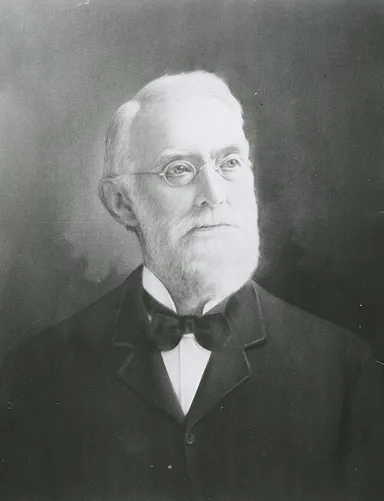
Electricity followed quickly. In 1878 William Armstrong’s Cragside house in Northumberland, England, used lake water to power an arc lamp, making it the first house lit by hydroelectricity (Cragside). In 1880 a water turbine drove a dynamo for a theater in Grand Rapids, Michigan (DOE). On September 30, 1882, the Vulcan Street Plant in Appleton, Wisconsin, became the first Edison hydroelectric central station serving private and commercial customers, just 26 days after Edison’s steam-powered Pearl Street station opened (ASME).
Those early plants used direct current, which could not travel far. The Adams Plant at Niagara Falls, which began operating on August 26, 1895, proved large-scale alternating current and soon sent power 20 miles to Buffalo (IEEE Milestone). The 20th century brought giant federal dams: Hoover Dam was completed in 1936 and Bonneville began operating in 1937 (DOE). China’s Three Gorges Dam reached full operation in July 2012 when the last of its 32 main generators came online (Three Gorges Dam).
| Year | Milestone | Source |
|---|---|---|
| Over 2,000 years ago | Greeks use water wheels to grind wheat | DOE |
| 1827 | Benoît Fourneyron builds a working water turbine in France | Britannica |
| 1840s | Francis and Boyden develop high-efficiency turbines at Lowell, Massachusetts | NPS |
| 1878 | Cragside, England: first house lit by hydroelectricity | Cragside |
| 1880 | Pelton patents the split-bucket impulse wheel (US 223,692) | ASME |
| 1882 | Vulcan Street Plant, Appleton, Wisconsin: first Edison hydroelectric central station | ASME |
| 1895 | Adams Plant at Niagara Falls begins large-scale AC generation | IEEE/ETHW |
| 1936 | Hoover Dam completed on the Colorado River | DOE |
| 2012 | Three Gorges Dam reaches full 22,500 MW operation | Three Gorges Dam, USGS |
Scientific references
- Kumar, A., Schei, T., Ahenkorah, A., et al. (2011). “Hydropower.” In IPCC Special Report on Renewable Energy Sources and Climate Change Mitigation, Cambridge University Press, 437–496. doi:10.1017/CBO9781139151153.009
- Deemer, B. R., Harrison, J. A., Li, S., et al. (2016). “Greenhouse gas emissions from reservoir water surfaces: A new global synthesis.” BioScience, 66(11), 949–964. doi:10.1093/biosci/biw117
- Zarfl, C., Lumsdon, A. E., Berlekamp, J., Tydecks, L., & Tockner, K. (2015). “A global boom in hydropower dam construction.” Aquatic Sciences, 77(1), 161–170. doi:10.1007/s00027-014-0377-0
- International Hydropower Association (2025). 2025 World Hydropower Outlook. hydropower.org
Bottom line
Hydroelectric power turns the energy of falling water into electricity and remains the largest source of renewable electricity worldwide, at about 4,578 TWh and 14.3% of global power in 2024 (IHA). In the US it supplied about 6% of utility-scale generation in 2025 (EIA), concentrated in Washington, Oregon and California.
Its strengths are flexibility, long life and storage through pumped hydro. Its weaknesses are drought sensitivity, few remaining large sites, and real impacts on rivers, fish and communities. For the full picture of how hydro fits alongside sun, wind and earth heat, start at our renewable energy homepage or explore the renewable energy sources guide.
FAQ
Frequently asked questions
How does a hydroelectric dam generate electricity?
A dam holds water in a reservoir above the power station. When operators open the intake gates, water drops through a large pipe called a penstock and pushes on the blades of a turbine. The turbine shaft turns a generator, which converts the mechanical energy into electricity. The water then leaves through the tailrace and returns to the river below the dam.
Is hydroelectric power renewable?
Yes. Hydropower uses the water cycle, which is driven by the sun: water evaporates, falls as rain or snow, and flows back downhill through rivers. As long as rain and snow keep refilling rivers, the resource is replaced. Output can still fall sharply during droughts, so hydropower is renewable but not constant from year to year.
What percentage of US electricity comes from hydropower?
Conventional hydropower supplied about 6% of US utility-scale electricity generation in 2025, roughly 247 billion kilowatthours, according to the US Energy Information Administration. Washington State alone produced about 26% of all US hydroelectricity that year, followed by Oregon and California.
What is the largest hydroelectric dam in the world?
The Three Gorges Dam on the Yangtze River in China is the largest, with a generating capacity of 22,500 megawatts according to the USGS. Itaipu on the Brazil and Paraguay border has 14,000 megawatts. Because Itaipu's river flow is steadier, the two plants can produce similar amounts of electricity over a year.
What are the disadvantages of hydroelectric power?
Large dams block fish migration, change river temperature, flow and sediment, flood land and sometimes force people to relocate. Reservoirs can release methane and carbon dioxide from decaying plant matter. Hydropower output also drops during droughts, and new large dams are expensive and slow to build.
What is pumped storage hydropower?
Pumped storage hydropower works like a giant battery. It pumps water from a lower reservoir to an upper reservoir when electricity is cheap or plentiful, then lets the water flow back down through turbines when demand is high. The world had about 189 GW of pumped storage in 2024, according to the International Hydropower Association.
What is the difference between run-of-river and dam hydropower?
A dam, or impoundment, plant stores water in a reservoir so operators can choose when to generate. A run-of-river plant diverts part of a river through a channel or penstock and stores little or no water, so its output rises and falls with the natural flow of the river. Run-of-river plants usually have smaller environmental footprints.
How long does a hydroelectric dam last?
Hydropower plants commonly operate for 50 to 100 years, according to the US Energy Information Administration, which makes them among the longest-lived power plants. The concrete dam usually outlasts the machinery: turbines, generators and controls are refurbished or replaced during that life, which can also raise the plant's output and efficiency.
Can you use hydroelectric power at home?
Yes, if you have a stream or river with enough flow and drop on your property. These microhydropower systems usually generate up to 100 kilowatts, and the US Department of Energy says a 10-kilowatt system can generally power a large home, a small resort or a hobby farm. You also need water rights and local permits.
19 Sources
- EIA, Where hydropower is generated (2025 data)
- EIA, Hydropower and the environment
- EIA, Electricity in the United States (2025 data)
- US DOE Water Power Technologies Office, Types of hydropower plants
- International Hydropower Association, 2025 World Hydropower Outlook
- USGS, Three Gorges Dam: The world's largest hydroelectric plant
- Energy Institute Statistical Review / Ember via Our World in Data, hydropower generation and share of electricity by country (2024-2025)
- US DOE Energy Saver, Microhydropower systems
- US DOE Water Power Technologies Office, History of Hydropower
- Britannica, Waterpower (Fourneyron turbine, 1827)
- National Park Service, Water Power in the Mills (Lowell, Francis turbine)
- ASME Landmark #157, Pelton Waterwheel Collection (US Patent 223,692, 1880)
- Wikipedia, Cragside (hydroelectric lighting, 1878)
- ASME Landmark #29, Vulcan Street Power Plant (1882)
- IEEE Milestone, Adams Hydroelectric Generating Plant, 1895 (ETHW)
- Wikipedia, Three Gorges Dam (full operation July 2012)
- Kumar et al. (2011), IPCC SRREN Chapter 5: Hydropower
- Deemer et al. (2016), BioScience
- Zarfl et al. (2015), Aquatic Sciences
Published October 25, 2026 · updated October 25, 2026 by Izhar Ahmad Danish. Part of our renewable energy guide. Found an error? Tell us.