Quick answer
A renewable resource is a natural resource that is replenished by natural processes on a human timescale, such as sunlight, wind, water, forests, crops and fish. Some never run out; others, like timber or soil, renew only if use stays below regrowth. Renewables supplied about 9% of US energy consumption in 2025 (EIA).
Key facts
- About 9% of US energy consumption came from renewable sources in 2025 (EIA, 8.83 of 96.26 quadrillion Btu).
- 4.14 billion hectares of forest cover about a third of Earth's land (FAO, FRA 2025).
- 10.9 million hectares of forest were lost to deforestation each year in 2015 to 2025 (FAO).
- Up to 1,000 years can be needed to form 1 cm of topsoil (FAO).
- About 96.5% of Earth's water is in the oceans (USGS).
On this page
- What is a renewable resource?
- What are examples of renewable resources?
- 20 examples of renewable resources (reference table)
- History of the renewable resource idea
- What is renewability?
- Renewable vs sustainable use: what is the difference?
- Is it renewable? Quick answers for common resources
- Renewable vs nonrenewable resources
- Why are renewable resources important?
- How can we use renewable resources sustainably?
- Scientific references
- Bottom line
- Frequently asked questions
“Renewable” is usually used about energy, but the idea is much older and broader. Forests, fish stocks, fresh water and farmland soil are all renewable resources, and so are the sunlight and wind that power modern renewable energy systems. What they share is that nature replaces them. What separates them is how fast.
This guide defines a renewable resource, gives examples inside and outside the energy sector, explains renewability and why “renewable” is not the same as “sustainable”, and includes a reference table you can use for homework or reports.
What is a renewable resource?
A renewable resource is a natural resource that is replenished by natural processes at a rate comparable to, or faster than, the rate at which people use it. Sunlight, wind, rain, forests, crops and fish are all renewable resources.
The opposite is a nonrenewable resource: one that exists in a fixed amount or forms so slowly (over millions of years) that using it permanently reduces the supply. Coal, oil, natural gas, uranium and most metal ores are nonrenewable. Our non-renewable resources guide covers them in depth.
Three things decide whether a resource counts as renewable:
- A natural replenishment process. The sun shines, the water cycle runs, trees grow, fish reproduce.
- A human timescale. Replenishment happens within years, decades or at most a few human lifetimes, not geological ages.
- Use that does not outrun it. If extraction is faster than regeneration, even a renewable resource will decline.
For energy, the IPCC’s Special Report on Renewable Energy Sources (2011) turns these tests into a formal definition: energy from solar, geophysical or biological sources that is replenished by natural processes at a rate that equals or exceeds its rate of use. Economists make the same split between renewable and exhaustible resources, a line of thinking that goes back to Harold Hotelling’s 1931 paper on how a finite stock should be priced and used over time.
What are examples of renewable resources?
Examples of renewable resources include sunlight, wind, flowing water, tides and waves, geothermal heat, forests and timber, crops and other biomass, fresh water, fish and wildlife, and the oxygen produced by plants. Soil is renewable in principle but forms extremely slowly.
Renewable energy resources
These are the resources behind renewable electricity, heat and fuel:
- Solar energy: sunlight converted to electricity by photovoltaic (PV) panels or to heat by solar collectors. See solar energy.
- Wind: moving air that turns turbines. See wind energy.
- Hydropower: flowing and falling water driven by the water cycle. Global output reached about 4,578 TWh in 2024 (IHA). See hydroelectric power.
- Geothermal: heat from inside the Earth. See geothermal energy.
- Biomass: wood, crops, manure and waste. See biomass energy.
- Ocean energy: tides and waves. See tidal and wave energy.
In the United States, renewable sources supplied about 9% of total energy consumption in 2025, about 8.83 of 96.26 quadrillion Btu, according to the EIA. Their share of electricity is much higher: about 24% of utility-scale generation in 2025 (EIA), led by wind at about 11%, solar at about 7% and hydropower at about 6%.
Renewable resources beyond energy
Many of the resources people depend on most are renewable but have nothing to do with power plants:
- Fresh water: replenished by rain and snow through the water cycle.
- Forests and timber: regrow after harvest, given time and replanting.
- Fish and seafood: reproduce naturally if stocks are not overfished.
- Crops and livestock: regrown each season or generation.
- Soil: rebuilt by weathering rock and decaying organic matter, but very slowly.
- Clean air and oxygen: produced by plants and algae through photosynthesis.
- Natural fibers: cotton, wool, bamboo and hemp.
20 examples of renewable resources (reference table)
The table below lists 20 common renewable resources, how each is replenished, and the main risk of depletion. The energy resources (sunlight, wind, tides, waves, geothermal heat, flowing water and biomass) are the examples most often given in a list of 5, 7 or 10; the rest are renewable materials, food, air and water.
| Resource | Type | How it is replenished | Renewal speed | Main depletion risk |
|---|---|---|---|---|
| Sunlight | Energy | Solar radiation | Continuous | None on human timescales |
| Wind | Energy | Uneven solar heating of the atmosphere | Continuous | None |
| Tides | Energy | Gravity of the moon and sun | Twice daily cycle | None |
| Geothermal heat | Energy | Heat from Earth’s interior | Continuous (local reservoirs can cool if overused) | Overdrawing a local reservoir |
| River water and hydropower | Water / energy | Water cycle: evaporation, rain, runoff | Seasonal | Drought, over-allocation |
| Groundwater | Water | Rain soaking into aquifers | Years to thousands of years | Pumping faster than recharge |
| Forests and timber | Material / biomass | Tree growth | Decades | Deforestation |
| Crops | Food / biomass | Planting and growth | One season | Soil degradation, water shortage |
| Fish stocks | Food | Reproduction | Years | Overfishing |
| Topsoil | Land | Rock weathering and organic matter | Up to 1,000 years per cm (FAO) | Erosion, degradation |
| Ocean waves | Energy | Wind blowing over the sea | Continuous | None |
| Rain and snow (fresh water) | Water | Water cycle | Days to seasons | Drought, pollution |
| Biogas from manure and waste | Energy | Decomposing organic matter | Continuous while waste is produced | None if feedstock continues |
| Oxygen | Air | Photosynthesis by plants and algae | Continuous | Loss of forests and ocean plankton (locally) |
| Livestock | Food / material | Breeding | One to a few years | Overgrazing, disease |
| Wild animals and game | Food | Reproduction | Years | Overhunting, habitat loss |
| Grassland and pasture | Land / food | Regrowth of grasses | One season | Overgrazing, desertification |
| Cotton and plant fibers | Material | Planting and growth | One season | Water and soil depletion |
| Wool | Material | Sheep regrow their fleece | About a year | Overgrazing |
| Bamboo | Material | Fast regrowth from roots | A few years | Clearing faster than regrowth |
Sources: USGS (water cycle), FAO (forests and soil), EIA (biomass and biogas). Renewal speeds are general descriptions, not precise rates. For finite resources, see our list of non-renewable resources.
History of the renewable resource idea
The idea that some resources renew and others run out was formalized by economists and the United Nations between 1865 and 1987. It moved from a worry about coal, to a theory of exhaustible resources, to the modern concept of sustainable development.
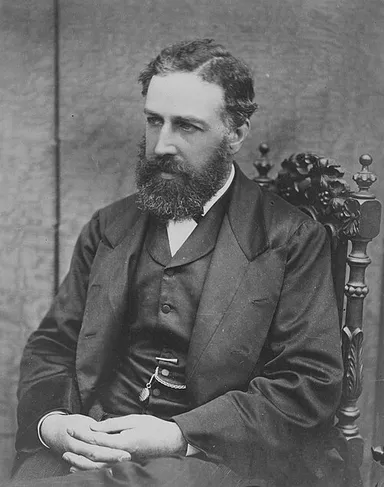
In 1865 the English economist William Stanley Jevons published The Coal Question, arguing that Britain’s industrial lead rested on a coal stock that could not last (Online Library of Liberty). In 1931 Harold Hotelling’s “The Economics of Exhaustible Resources” in the Journal of Political Economy gave the first rigorous model of how a finite stock is used up; its core result, now called Hotelling’s rule, is that the net price of an exhaustible resource should rise over time at the rate of interest (doi:10.1086/254195).
Renewable resources entered the public debate with The Limits to Growth (1972), a Club of Rome study that modeled what happens when population and industry outgrow the planet’s resources (Club of Rome). In 1987 the UN’s Brundtland Commission defined sustainability as “meeting the needs of the present without compromising the ability of future generations to meet their own needs” (United Nations), which is the root of today’s distinction between a renewable resource and sustainable use of it.
| Year | Milestone | Source |
|---|---|---|
| 1865 | Jevons, The Coal Question, warns that Britain’s coal stock is finite | Online Library of Liberty |
| 1931 | Hotelling, “The Economics of Exhaustible Resources” | Journal of Political Economy |
| 1972 | The Limits to Growth published for the Club of Rome | Club of Rome |
| 1981 | UN Conference on New and Renewable Sources of Energy, Nairobi | UN Digital Library |
| 1987 | Brundtland Commission defines sustainable development | United Nations |
| 1992 | Rio Earth Summit adopts Agenda 21 | United Nations |
| 2011 | IPCC publishes a formal definition of renewable energy (SRREN) | IPCC |
| 2015 | UN Sustainable Development Goal 7: affordable and clean energy | UN SDGs |
Science has since added a planetary view: Steffen et al. (2015) set out “planetary boundaries” for land use, freshwater use and other Earth systems, a way of measuring when use of a renewable resource outruns what the planet can regenerate.
What is renewability?
Renewability is the ability of a resource to replace itself through natural processes in a time frame that matters to people. It is not a yes-or-no property but a spectrum, set by the ratio between how fast the resource regenerates and how fast it is used.
It helps to think of three groups:
- Flow resources (inexhaustible): sunlight, wind, tides and waves. Using them today does not reduce what is available tomorrow. A solar panel on your roof does not use up the sun.
- Stock-and-flow resources (renewable if managed): forests, fish, groundwater, soil and grassland. They have a stock that regrows; if harvest exceeds regrowth, the stock shrinks and can collapse.
- Stock resources (nonrenewable): fossil fuels and minerals. The stock is fixed for practical purposes.
The middle group is where most problems happen. These resources are renewable on paper but can be depleted in practice.
A quick test
Ask: “If everyone kept using this at today’s rate, would there be as much in 50 years?” For sunlight and wind, yes. For a well-managed forest, yes. For an overpumped aquifer or an overfished stock, no, even though both are technically renewable.
Renewable vs sustainable use: what is the difference?
A renewable resource is one that can replenish itself; sustainable use means using it in a way that lets it keep replenishing indefinitely. Renewable describes the resource, sustainable describes how people manage it. For how the same test applies to power sources, see our sustainable energy guide.
Real-world examples show the difference:
Forests
Forests are renewable, yet the FAO’s Global Forest Resources Assessment 2025 found that about 10.9 million hectares (about 27 million acres) of forest were lost to deforestation each year between 2015 and 2025. That is down from 17.6 million hectares a year in 1990 to 2000, but the FAO calls the current rate still too high. Net forest loss, after counting new forest growth, averaged about 4.12 million hectares a year over 2015 to 2025. The world still has about 4.14 billion hectares of forest, roughly a third of its land area.
Soil
Soil is the classic “renewable but not really” resource. The FAO has said it can take up to 1,000 years to form a single centimeter of soil, and in 2022 it warned that 90% of the Earth’s topsoil could be at risk by 2050 if degradation continues. At those rates, soil lost to erosion is gone for many human lifetimes.
Water
Water is renewed by the water cycle. The USGS estimates that about 96.5% of Earth’s water is in the oceans and that the oceans supply about 90% of the water that evaporates into the water cycle. But fresh water in a particular river or aquifer can still be used faster than rain refills it, which is why some aquifers have dropped sharply.
Biomass energy
Burning wood for energy uses a renewable resource. Whether it is sustainable depends on whether harvested forests regrow and on what else is affected. The EIA notes that overharvesting wood can cause deforestation. Our biomass energy guide covers this debate in detail.
| Example | Renewable? | Used sustainably when… | Used unsustainably when… |
|---|---|---|---|
| Forest | Yes | Harvest is at or below regrowth and the forest is replanted | Cleared faster than it regrows or converted to other land use |
| Fishery | Yes | Catch limits keep the breeding stock stable | Overfishing causes the stock to collapse |
| Aquifer | Yes, slowly | Pumping is at or below recharge | Pumping exceeds recharge for years |
| Farm soil | Yes, very slowly | Cover crops and low tillage keep erosion below formation | Erosion strips topsoil faster than it forms |
| Sunlight and wind | Yes | Always, as a resource | Not applicable; the resource cannot be overused |
Is it renewable? Quick answers for common resources
Most everyday resources fall clearly on one side of the line, but a few sit in between. Here are short answers for the ones people ask about most.
- Is solar energy renewable? Yes. Sunlight arrives continuously and using it does not reduce the supply.
- Is wind renewable? Yes. Wind is created by the sun heating the atmosphere unevenly and will keep blowing.
- Is hydropower renewable? Yes, because the water cycle refills rivers, but output falls in droughts. Global hydropower generation rebounded about 10% in 2024 after a dry 2023 (IHA).
- Is geothermal energy renewable? Yes overall. Heat from Earth’s interior is effectively limitless, although an individual geothermal reservoir can cool or lose pressure if it is overdrawn.
- Is biomass renewable? Yes, when plants are regrown. It becomes depleting when forests are cleared faster than they recover.
- Is natural gas renewable? No. Fossil natural gas formed over millions of years. Renewable natural gas made from manure, landfills or food waste is a different, biogenic product.
- Is nuclear energy renewable? No. Uranium is a mined mineral with a finite supply, though nuclear power is low-carbon.
- Is paper renewable? Paper is made from wood, a renewable resource, and can be recycled several times.
- Are metals renewable? No. Metal ores are finite, but metals such as aluminum, copper and steel can be recycled repeatedly, which stretches the supply.
- Is soil renewable? Technically yes, practically barely. At up to 1,000 years per centimeter (FAO), eroded topsoil does not come back on human timescales.
Recycling deserves a note: it does not make a finite resource renewable, but it reduces how fast the stock is drawn down.
Renewable vs nonrenewable resources
Renewable resources are replenished by natural processes on human timescales; nonrenewable resources exist in finite amounts or form over millions of years. Energy from renewables also tends to produce far fewer emissions in use.
| Feature | Renewable resources | Nonrenewable resources |
|---|---|---|
| Replenishment | Natural, within years to decades (or continuous) | Millions of years, effectively none |
| Examples | Sun, wind, water, forests, fish | Coal, oil, natural gas, uranium, metal ores |
| Can run out? | Flow resources no; stock resources yes, if overused | Yes |
| Energy emissions | Low or none during use (biomass is the main exception) | Fossil fuels emit CO2 when burned |
| US share of energy consumption | About 9% (EIA, 2025) | About 91% (fossil fuels and nuclear) |
For a full side-by-side on energy specifically, read renewable vs nonrenewable energy.
Why are renewable resources important?
Renewable resources matter because they can supply energy, food, water and materials indefinitely if managed well, while nonrenewable resources will eventually run short. In energy, they also cut greenhouse gas emissions and air pollution.
- Long-term supply. Sunlight and wind cannot be depleted.
- Lower emissions. Wind, solar and hydropower produce electricity without burning fuel; Panwar, Kaushik and Kothari (2011) review the environmental gains. See clean energy.
- Energy security. Domestic sun, wind and water reduce dependence on imported fuels.
- Ecosystem services. Forests, soil and fisheries also clean water, store carbon and support biodiversity.
- Lower running costs. Renewable power plants have no fuel bill. To see what electricity costs you at home, try the electricity cost calculator, or convert appliance power into energy with the kWh calculator.
The broader benefits of renewable energy are covered in advantages of renewable energy.
How can we use renewable resources sustainably?
Using renewable resources sustainably means taking no more than nature replaces, protecting the systems that regenerate them, and switching from finite resources where possible.
- Match harvest to regrowth. Set catch limits, harvest quotas and pumping limits based on measured regeneration.
- Replant and restore. Reforest cleared land, restore wetlands and rebuild degraded soils with cover crops and reduced tillage.
- Reduce waste. Use water, wood and food more efficiently so less needs to be taken.
- Shift energy to flow resources. Wind, solar and hydropower replace fossil fuels without depleting a stock.
- Monitor and adapt. Track forest cover, fish stocks and aquifer levels, and change rules when trends turn negative.
At home, the simplest steps are using less energy, choosing renewable electricity where available, and cutting waste. Our renewable energy sources guide shows which technologies can work for different homes and regions.
Scientific references
- Hotelling, H. (1931). “The Economics of Exhaustible Resources.” Journal of Political Economy, 39(2), 137–175. doi:10.1086/254195
- World Commission on Environment and Development (1987). Our Common Future (the Brundtland Report). UN document A/42/427. UN Digital Library
- IPCC (2011). Renewable Energy Sources and Climate Change Mitigation: Special Report of the Intergovernmental Panel on Climate Change (O. Edenhofer et al., eds.). Cambridge University Press. doi:10.1017/CBO9781139151153
- Steffen, W. et al. (2015). “Planetary boundaries: Guiding human development on a changing planet.” Science, 347(6223), 1259855. doi:10.1126/science.1259855
- Panwar, N. L., Kaushik, S. C., & Kothari, S. (2011). “Role of renewable energy sources in environmental protection: A review.” Renewable and Sustainable Energy Reviews, 15(3), 1513–1524. doi:10.1016/j.rser.2010.11.037
Bottom line
A renewable resource is one that nature replenishes on a human timescale: sunlight, wind, water, tides, geothermal heat, forests, crops, fish and, very slowly, soil. Renewability ranges from inexhaustible (the sun) to fragile (topsoil that can take up to 1,000 years per centimeter to form, per the FAO).
Renewable is not the same as sustainable. Forests, fisheries and aquifers can all be depleted if use outruns regrowth, as the FAO’s deforestation figures show. For energy, renewable resources supplied about 9% of US consumption and about 24% of US utility-scale electricity in 2025 (EIA). To keep exploring clean, renewable power, visit our renewable energy homepage.
FAQ
Frequently asked questions
What is a renewable resource in simple words?
A renewable resource is something from nature that refills itself fast enough for people to keep using it, such as sunlight, wind, rain, trees and fish. A nonrenewable resource, such as coal or oil, took millions of years to form, so once it is used up it is effectively gone for good.
What are 10 examples of renewable resources?
Ten examples are sunlight, wind, flowing water, ocean tides and waves, geothermal heat, forests and timber, crops and plant biomass, fresh water from rain and rivers, fish and other wildlife, and oxygen produced by plants. Soil is often listed too, but it forms so slowly that it behaves like a nonrenewable resource when it erodes.
Is water a renewable resource?
Water is renewable overall because the water cycle constantly evaporates, rains and refills rivers and lakes. But individual supplies can be used up. Groundwater in some aquifers takes thousands of years to recharge, and pumping it faster than it refills depletes it, so water must be managed to stay renewable in practice.
Is wood a renewable resource?
Wood is a renewable resource because trees can be replanted and regrown, typically over decades. It stays renewable only if harvesting does not exceed regrowth. The FAO reports that about 10.9 million hectares of forest were lost to deforestation each year between 2015 and 2025, which shows how renewable resources can still be depleted.
What is the difference between renewable and sustainable?
Renewable describes a resource that can replenish itself naturally. Sustainable describes how we use it: at a rate and in a way that can continue indefinitely without degrading the resource or the environment. A renewable resource such as a fishery or forest can be used unsustainably and collapse.
What does renewability mean?
Renewability is the ability of a resource to replace itself through natural processes within a time frame that is useful to people. It depends on the regeneration rate compared with the rate of use. Sunlight has effectively unlimited renewability, while topsoil, which can take up to a thousand years to form a centimeter, has very low renewability.
What are 5 renewable and 5 nonrenewable resources?
Five renewable resources are sunlight, wind, flowing water, forests and fish, because nature replaces them within years or continuously. Five nonrenewable resources are coal, oil, natural gas, uranium and metal ores such as iron and copper, which formed over millions of years and exist in finite amounts.
Can renewable resources run out?
Flow resources such as sunlight, wind and tides cannot run out on human timescales. Stock resources such as forests, fish, groundwater and soil can, if people use them faster than they regrow. Overfishing, deforestation and over-pumped aquifers are examples of renewable resources being depleted locally, sometimes for decades or longer.
17 Sources
- EIA, U.S. energy production and consumption FAQ (2025 data)
- EIA, Electricity in the United States (2025 data)
- EIA, Biomass explained (2025 data)
- FAO, Global Forest Resources Assessment 2025 news release
- FAO, Securing healthy soils, Director-General statement (2012)
- UN News, FAO warns 90 per cent of Earth's topsoil at risk by 2050 (2022)
- USGS Water Science School, Oceans and seas and the water cycle
- International Hydropower Association, 2025 World Hydropower Outlook
- IPCC, Special Report on Renewable Energy Sources and Climate Change Mitigation (2011)
- Hotelling, The Economics of Exhaustible Resources, Journal of Political Economy (1931)
- Jevons, The Coal Question (1865), Online Library of Liberty
- Club of Rome, The Limits to Growth (1972)
- United Nations, Sustainability (Brundtland definition, 1987)
- UN Digital Library, Our Common Future (A/42/427, 1987)
- UN Digital Library, Nairobi Conference on New and Renewable Sources of Energy (1981)
- United Nations, Rio Earth Summit (1992)
- UN, Sustainable Development Goal 7
Published October 25, 2026 · updated October 25, 2026 by Izhar Ahmad Danish. Part of our renewable energy guide. Found an error? Tell us.