Quick answer
Biomass energy is energy from organic material such as wood, crops, manure and food waste, burned directly or converted into biofuels and biogas. It supplied about 5% of US primary energy in 2025 (EIA), mostly as biofuels (53%) and wood (39%). It is renewable if the plants are regrown, but not automatically carbon-neutral.
Key facts
- About 5% of US primary energy came from biomass in 2025, about 4,853 trillion Btu (EIA, preliminary).
- 53% of US biomass energy in 2025 was biofuels, 39% wood and wood waste, and 8% waste, manure and sewage (EIA).
- About 1% of US utility-scale electricity came from biomass in 2025 (EIA).
- 48% of US biomass energy was used by industry in 2025, mostly in wood products and paper mills (EIA).
- About 9.4 million tons of wood pellets were exported by the US in 2025 (EIA).
On this page
- What is biomass energy?
- History of biomass energy
- What are examples of biomass?
- How does biomass energy work?
- How much energy comes from biomass in the US?
- How much of the world’s energy comes from biomass?
- Is biomass renewable?
- Is biomass carbon neutral? The carbon debate
- Is biomass dirtier than coal?
- What are the pros and cons of biomass energy?
- Biomass vs other renewable energy sources
- Scientific references
- Bottom line
- Frequently asked questions
Biomass is the oldest fuel people have used: wood fires heated homes and cooked food long before coal, oil or electricity. Today biomass energy still matters, from the ethanol blended into US gasoline to the wood waste that powers paper mills. It is one of the main forms of renewable energy, and also the most argued-about.
This guide covers what counts as biomass, real examples, the four main ways to turn it into useful energy, current US and global numbers, and the honest state of the carbon debate.
What is biomass energy?
Biomass energy is energy produced from renewable organic material that comes from plants and animals. The EIA defines biomass as exactly that: organic matter that can be burned directly for heat or converted into liquid and gaseous fuels.
Plants capture sunlight through photosynthesis and store it as chemical energy in their tissues. When we burn wood or ferment corn into ethanol, we release that stored solar energy. Animals that eat plants pass some of that energy into manure, which is why manure can also be a fuel.
Biomass was the largest source of total annual US energy consumption until the mid-1800s, according to the EIA. Coal, then oil and natural gas, overtook it as industry grew (the full story is in the history section below). In 2025, biomass supplied about 5% of US primary energy, about 4,853 trillion British thermal units (Btu), based on preliminary EIA data. To put Btu into more familiar units, our BTU to kWh converter does the math.
History of biomass energy
Biomass is the energy source humans have used longest. Fires fed by wood and dung cooked food and heated shelters for many thousands of years, and wood remained the main fuel well into the industrial age. In the United States, wood stayed the leading energy source until the mid- to late-1800s, when coal took over (EIA). Globally, traditional biomass still supplied about half of all primary energy in 1900, according to Vaclav Smil’s historical estimates compiled by Our World in Data.
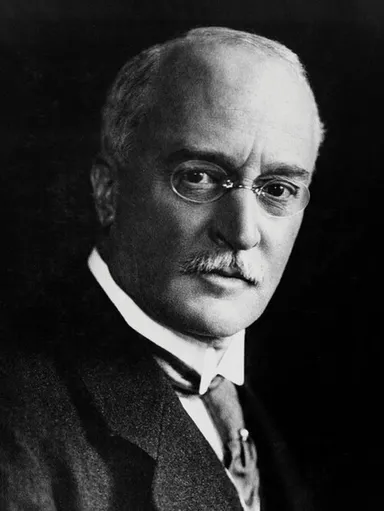
Modern bioenergy grew out of three threads. The first was biogas: engineers in colonial India and Victorian England captured sewage gas for lighting in the late 1800s, although those early dates come mostly from secondary histories (Waste360). The second was liquid fuels for engines. A Diesel engine famously ran on peanut oil at the 1900 Paris World Exhibition; chemist Gerhard Knothe notes that, by Diesel’s own account, the French government requested the test and the engine had been built for mineral oil (AOCS). Henry Ford expected his Model T to run on ethanol made from corn (energy4me), but cheap gasoline won the early market. The third thread was energy security: after the 1973 oil shock, Brazil’s military government launched the National Alcohol Program (Proálcool) in 1975 to replace gasoline with sugarcane ethanol, for a time the world’s largest oil-substitution program (Rogers, 2022).
In the United States, biofuels became federal mandate policy when the Energy Policy Act of 2005 created the Renewable Fuel Standard (RFS), and the Energy Independence and Security Act of 2007 expanded it with rising annual volume requirements out to 2022 (EPA). Within months, two papers in Science challenged the assumption that crop biofuels cut emissions (see the carbon debate below), and land use has shaped bioenergy policy ever since.
| Year | Milestone | Source |
|---|---|---|
| Mid- to late-1800s | Coal overtakes wood as the leading US energy source | EIA |
| 1900 | Traditional biomass still about half of global primary energy | Our World in Data |
| 1900 | Diesel engine runs on peanut oil at the Paris World Exhibition | AOCS |
| Early 1900s | Henry Ford expects the Model T to run on corn ethanol | energy4me |
| 1975 | Brazil launches Proálcool, its national sugarcane ethanol program | Rogers, 2022 |
| 2005 | US Energy Policy Act creates the Renewable Fuel Standard | EPA |
| 2007 | Energy Independence and Security Act expands the RFS | EPA |
| 2008 | Searchinger et al. and Fargione et al. publish land-use “carbon debt” studies in Science | doi:10.1126/science.1151861 |
| 2011 | IPCC Special Report on Renewable Energy assesses bioenergy in Chapter 2 | IPCC |
What are examples of biomass?
The main examples of biomass are wood and wood waste, agricultural crops and residues, the biological part of municipal garbage, and animal manure and human sewage. The EIA groups biomass sources into these four families.
| Biomass family | Examples | Main uses |
|---|---|---|
| Wood and wood processing waste | Firewood, wood pellets, wood chips, sawdust, black liquor from pulp and paper mills | Home heating, industrial heat and power, electricity |
| Agricultural crops and waste | Corn, soybeans, sugarcane, switchgrass, algae, crop and food processing residues | Mostly liquid biofuels (ethanol, biodiesel, renewable diesel) |
| Biogenic municipal solid waste | Paper, cotton and wool products, food, yard and wood waste | Waste-to-energy plants, landfill gas |
| Animal manure and human sewage | Dairy and hog manure, wastewater sludge | Biogas and renewable natural gas |
Source: EIA, Biomass explained.
A few terms worth knowing:
- Feedstock is the raw biomass that goes into a conversion process, such as corn kernels for an ethanol plant.
- Black liquor is a lignin-rich byproduct of making paper pulp. Paper mills burn it to recover chemicals and generate their own heat and power.
- Energy crops are plants grown mainly for fuel, such as switchgrass or fast-growing willow and poplar.
- Biogenic means made by living organisms. Only the biogenic part of garbage (food, paper, wood) counts as biomass; plastics made from oil do not.
How does biomass energy work?
Biomass energy works by releasing the chemical energy stored in organic matter, either directly as heat through burning or by first converting it into a liquid or gas fuel. There are four main conversion routes: direct combustion, thermochemical conversion (gasification and pyrolysis), biological conversion (anaerobic digestion and fermentation), and chemical conversion into biodiesel.
1. Direct combustion
Burning is the most common way to use biomass. Wood stoves heat homes, and industrial boilers burn wood chips, bark and black liquor to make steam for heat and electricity. A biomass power plant follows the same steps as a coal plant:
- Fuel (chips, pellets or waste) is fed into a boiler.
- The fire heats water into high-pressure steam.
- The steam spins a turbine connected to a generator.
- The steam is condensed back to water and returned to the boiler.
- Many plants also use the leftover heat for industrial processes, a setup called combined heat and power (CHP).
Waste-to-energy plants burn municipal solid waste at around 1,800°F to 2,000°F (about 980°C to 1,090°C), according to the EIA, and must use pollution controls such as scrubbers and fabric filters.
2. Gasification and pyrolysis
Gasification heats biomass with a limited amount of oxygen so it does not fully burn. The result is syngas, a mix of mainly carbon monoxide and hydrogen, which can fuel an engine or turbine or be processed into liquid fuels. Pyrolysis heats biomass without oxygen and produces bio-oil, gas and a charcoal-like solid called biochar.
3. Anaerobic digestion and fermentation
Anaerobic digestion uses bacteria to break down manure, sewage sludge or food waste in a sealed tank without oxygen. The output is biogas, which is mostly methane and carbon dioxide. Cleaned-up biogas is sold as renewable natural gas (RNG). Landfills produce the same gas naturally, and many capture it for power (EIA).
Fermentation uses yeast to turn the sugars in corn or sugarcane into ethanol, the most widely used biofuel in the United States (EIA).
4. Chemical conversion (biodiesel)
Transesterification reacts vegetable oils, animal fats or used cooking oil with an alcohol to produce biodiesel. Renewable diesel is made from similar feedstocks using a different refinery process and can replace petroleum diesel directly. Ethanol, biodiesel and renewable diesel are covered in depth in our biofuels guide.
| Conversion route | Input | Output | Typical use |
|---|---|---|---|
| Direct combustion | Wood, pellets, waste | Heat, steam | Home heating, industrial CHP, power plants |
| Gasification | Wood, residues | Syngas | Engines, turbines, liquid fuels |
| Pyrolysis | Wood, residues | Bio-oil, biochar, gas | Fuel oil substitute, soil amendment |
| Anaerobic digestion | Manure, sewage, food waste | Biogas / RNG | Electricity, heat, pipeline gas, vehicle fuel |
| Fermentation | Corn, sugarcane | Ethanol | Gasoline blending |
| Transesterification | Vegetable oils, fats | Biodiesel | Diesel engines |
How much energy comes from biomass in the US?
Biomass supplied about 5% of US primary energy consumption in 2025, about 4,853 trillion Btu (EIA, preliminary). Most of it was used as transport fuel and industrial heat rather than to make electricity.
By type of biomass (2025)
| Type | Energy (trillion Btu) | Share of US biomass |
|---|---|---|
| Biofuels (ethanol, biodiesel, renewable diesel) | 2,569 | 53% |
| Wood and wood waste | 1,912 | 39% |
| Municipal solid waste, animal manure and sewage | 372 | 8% |
By sector (2025)
| Sector | Energy (trillion Btu) | Share |
|---|---|---|
| Industrial | 2,317 | 48% |
| Transportation | 1,683 | 35% |
| Residential | 372 | 8% |
| Electric power | 318 | 7% |
| Commercial | 163 | 3% |
Source for both tables: EIA, Biomass explained, preliminary 2025 data. Shares are rounded.
Two points stand out. First, biomass is a small part of US electricity: about 1% of utility-scale generation in 2025, compared with about 11% for wind and 7% for solar (EIA). Second, the US is a net exporter of biomass energy, largely because it shipped about 9.4 million tons of wood pellets abroad in 2025 (EIA), much of it to power stations in Europe and Asia.
How much of the world’s energy comes from biomass?
Bioenergy is the largest renewable energy source worldwide when heat and transport fuels are counted, not just electricity. The International Energy Agency (IEA) splits it into “traditional” and “modern” use.
- Traditional use of biomass means burning wood, charcoal, crop waste or dung in open fires or simple stoves, mainly for cooking in low-income countries. The IEA estimates it accounted for 6% of global final energy consumption in 2021, down from 9% in 2000, and links it to household air pollution.
- Modern bioenergy means efficient stoves and boilers, biofuels, biogas and biomass power. REN21, using IEA data, estimated it provided about 5.1% of global final energy demand in 2019, roughly half of all renewable energy in final consumption.
The IEA does not count traditional biomass in its “modern renewables” figure because of its health and environmental impacts. In 2021, renewables reached 18.7% of global final energy including traditional biomass, but 12.5% excluding it (IEA). That gap is almost entirely wood and charcoal used for cooking.
Is biomass renewable?
Yes, biomass is renewable because plants and trees can be regrown on human timescales, unlike coal, oil and natural gas, which formed over millions of years. But it is only renewable in practice when harvesting does not exceed regrowth.
Crop residues and annual energy crops regrow every season. Forests take decades. If a forest is cut and not replanted, or converted to farmland, the carbon and the resource are both lost. The EIA warns that overharvesting wood can cause deforestation. The distinction between a resource that can renew and one that is used sustainably is explained in our guide to renewable resources, and the comparison with fossil fuels is in renewable vs nonrenewable energy.
Renewable is not the same as sustainable
A woodlot that is thinned a little each year and grows back is a renewable fuel source used sustainably. Clear-cutting old forest for pellets uses the same renewable resource unsustainably. Both burn “biomass”, but their climate and ecological effects are very different.
Is biomass carbon neutral? The carbon debate
Biomass is often treated as carbon-neutral in energy accounting, but in reality its climate impact ranges from strongly beneficial to worse than fossil fuels in the short term, depending on the feedstock, how fast it regrows and what it replaces.
The case for carbon neutrality
The EIA describes the reasoning: the plants that make up biomass absorb nearly as much carbon dioxide through photosynthesis as is released when the biomass is burned. Over a full growth cycle, carbon moves from the atmosphere into plants and back again, rather than coming out of ancient underground stores like fossil fuels.
Biogas makes a further case. Manure and landfills release methane naturally. Capturing that methane and burning it produces CO2 instead, and because methane is a much stronger greenhouse gas, the EIA notes the overall greenhouse effect is lower.
The case against
- Carbon debt and timing. Burning a tree releases its carbon at once. Regrowing a similar tree can take decades, so atmospheric CO2 is higher in the meantime. A dynamic model by Sterman, Siegel and Rooney-Varga (2018) found that replacing coal with wood from eastern US forests initially raises atmospheric CO2, with a payback of 44 to 104 years after clearcut depending on forest type (Environmental Research Letters).
- Supply-chain emissions. Harvesting, drying, pelletizing and shipping biomass all use energy, often fossil fuel.
- Land-use change. Clearing forest or grassland to plant energy crops releases stored soil and plant carbon and can wipe out the benefit. Fargione et al. (2008) calculated that converting rainforests, peatlands, savannas or grasslands to grow crop biofuels creates a “biofuel carbon debt” of 17 to 420 times the annual greenhouse gas savings those biofuels deliver (Science).
- Indirect land-use change. Searchinger et al. (2008) modeled how farmers worldwide replace cropland diverted to fuel. Counting that effect, US corn ethanol nearly doubled greenhouse emissions over 30 years instead of saving 20%, and switchgrass grown on corn land raised them by 50% (Science).
- Lower efficiency. Wood has less energy per ton than coal, so more CO2 can be released per unit of electricity at the smokestack.
- Food competition. Corn and soybeans used for fuel use cropland that could grow food.
Where most experts land
The scientific literature points in a consistent direction. Both 2008 Science papers concluded that biofuels made from waste biomass, or from perennials grown on degraded and abandoned farmland, incur little or no carbon debt. The IPCC’s Special Report on Renewable Energy found that bioenergy’s lifecycle emissions depend heavily on feedstock, land-use change and management, ranging from large savings to net increases (IPCC SRREN, Ch. 2). Searchinger and colleagues later argued that carbon accounting rules which treat all bioenergy as automatically carbon-neutral contain a “critical climate accounting error” (Science, 2009).
The most defensible uses of biomass are wastes and residues that would otherwise rot or be burned in the open: sawmill offcuts, black liquor, crop residues, manure, sewage and food waste. Purpose-grown crops and whole-tree harvesting are the most contested. When you see “biomass is carbon neutral”, ask which biomass and over what time frame.
Is biomass dirtier than coal?
At the smokestack, often yes: burning wood releases about 93.8 kg of CO2 per million Btu of heat, roughly the same as bituminous coal (93.2 kg) and far more than natural gas (52.9 kg), according to EPA emission factors and EIA coefficients. Whether it is dirtier overall depends on regrowth.
| Fuel | kg CO2 per million Btu burned | Source |
|---|---|---|
| Wood and wood residuals | 93.8 | EPA |
| Bituminous coal | 93.2 | EIA |
| Subbituminous coal | 97.1 | EIA |
| Natural gas | 52.9 | EIA |
The difference from coal is where the carbon came from. Coal’s carbon was locked away for millions of years; wood’s carbon was in the atmosphere decades ago and can be reabsorbed if the forest regrows, which is the carbon-debt question covered above. Biomass power plants also tend to be less efficient than large coal plants, so emissions per kWh of electricity can be higher. For local air quality, wood smoke contains particulate matter and carbon monoxide (EIA), which is why modern biomass plants and EPA-certified stoves use emission controls.
What are the pros and cons of biomass energy?
Biomass’s biggest advantages are that it can be stored and dispatched, it can use waste, and it can replace fossil fuels in heat and transport. Its biggest drawbacks are air pollution, land use and an uncertain climate benefit.
| Pros | Cons |
|---|---|
| Can be stored and burned on demand, unlike wind and solar | Burning produces particulate matter and carbon monoxide (EIA) |
| Uses waste streams: sawdust, manure, food waste, sewage | Overharvesting can cause deforestation (EIA) |
| Provides liquid fuels for vehicles today | Energy crops compete with food for land and water |
| Reduces landfill volume and captures methane | Lower energy density means more transport and storage |
| Supports rural and forestry jobs | Climate benefit varies widely by feedstock and timing |
The EIA notes that modern wood stoves and fireplace inserts cut particulate emissions, and that biofuels are generally cleaner-burning than petroleum fuels, though their production still has environmental effects. For how biomass compares on these points with other options, see clean energy and renewable energy sources.
Biomass vs other renewable energy sources
Biomass is the only major renewable that is a fuel: it can be stored in a pile or a tank and used whenever needed, much like coal or gas. Hydropower shares some of that flexibility through reservoirs (see hydroelectric power), while wind and solar depend on the weather.
That flexibility is biomass’s niche. It is hard to beat for high-temperature industrial heat, for fuels in vehicles and aircraft that are difficult to electrify, and for turning waste into energy. For bulk electricity, wind and solar now provide far more US generation.
Scientific references
- Searchinger, T., Heimlich, R., Houghton, R. A., Dong, F., et al. (2008). “Use of U.S. Croplands for Biofuels Increases Greenhouse Gases Through Emissions from Land-Use Change.” Science, 319(5867), 1238–1240. doi:10.1126/science.1151861
- Fargione, J., Hill, J., Tilman, D., Polasky, S., & Hawthorne, P. (2008). “Land Clearing and the Biofuel Carbon Debt.” Science, 319(5867), 1235–1238. doi:10.1126/science.1152747
- Searchinger, T. D., Hamburg, S. P., Melillo, J., Chameides, W., et al. (2009). “Fixing a Critical Climate Accounting Error.” Science, 326(5952), 527–528. doi:10.1126/science.1178797
- Sterman, J. D., Siegel, L., & Rooney-Varga, J. N. (2018). “Does replacing coal with wood lower CO2 emissions? Dynamic lifecycle analysis of wood bioenergy.” Environmental Research Letters, 13(1), 015007. doi:10.1088/1748-9326/aaa512
- Chum, H., Faaij, A., Moreira, J., et al. (2011). “Bioenergy.” In IPCC Special Report on Renewable Energy Sources and Climate Change Mitigation. Cambridge University Press, 209–332. IPCC
- Knothe, G. (2001). “Historical perspectives on vegetable oil-based diesel fuels.” Inform, 12(11). AOCS
Bottom line
Biomass energy is energy from organic material: wood, crops, waste and manure. It supplied about 5% of US primary energy in 2025, mostly as biofuels and wood used in industry and transport, and only about 1% of US electricity (EIA). Worldwide, it remains the largest renewable energy source once heat and cooking fuels are counted.
Biomass is renewable when regrowth keeps pace with harvest, but it is not automatically carbon-neutral. Wastes and residues are the strongest case; burning whole forests is the weakest. To see how biomass fits with sun, wind, water and geothermal power, head back to our renewable energy homepage.
FAQ
Frequently asked questions
What is biomass energy in simple words?
Biomass energy is energy that comes from things that were recently alive, such as trees, crops, animal manure and food scraps. Plants store the sun's energy as chemical energy when they grow. Burning the material releases that energy as heat, and it can also be turned into liquid fuels like ethanol or gases like biogas.
What are 5 examples of biomass?
Five common examples are firewood and wood pellets, corn and sugarcane used to make ethanol, soybean oil used to make biodiesel, animal manure and sewage used to make biogas, and the paper, food and yard waste found in municipal garbage. Sawdust and black liquor from pulp mills are also major biomass fuels.
Is biomass renewable or nonrenewable?
Biomass is classed as renewable because plants can be regrown within years or decades, unlike coal or oil, which took millions of years to form. It only stays renewable if harvesting does not exceed regrowth. Clearing forests faster than they recover turns a renewable resource into a depleting one.
Is biomass carbon neutral?
Not automatically. Burning biomass releases carbon dioxide, and the idea of carbon neutrality rests on new plant growth absorbing the same amount again. Crop residues and waste regrow or would decay quickly, so they come close. Whole trees can take decades to regrow, and processing, transport and land-use change add emissions, so results vary by feedstock.
How much of US energy comes from biomass?
Biomass provided about 5% of total US primary energy consumption in 2025, about 4,853 trillion Btu, according to preliminary EIA data. Biofuels such as ethanol and biodiesel made up 53% of that, wood and wood waste 39%, and municipal solid waste, manure and sewage 8%.
What are the disadvantages of biomass energy?
Burning wood and waste produces particulate matter and carbon monoxide, overharvesting can cause deforestation, and growing energy crops competes with food crops for land and water. Biomass also has a lower energy density than fossil fuels, so it needs more transport and storage. Its climate benefit depends heavily on the feedstock.
How is biomass converted into electricity?
Most biomass power plants burn wood chips, pellets or waste in a boiler to make high-pressure steam, which spins a turbine connected to a generator, the same cycle used in a coal plant. Biomass can also be gasified into a fuel gas or digested into biogas, which then runs an engine or gas turbine.
Do trees count as biomass?
Yes. Trees, branches, bark, sawdust and other wood residues are the classic form of biomass. Wood and wood waste supplied about 39% of US biomass energy in 2025, according to EIA, mostly burned in paper mills, sawmills and home stoves. Only living or recently living material counts; fossil fuels like coal are ancient biomass but are classed as nonrenewable.
19 Sources
- EPA, GHG Emission Factors Hub (2023)
- EIA, Carbon dioxide emissions coefficients
- EIA, Biomass explained (2025 data)
- EIA, Biomass and the environment
- EIA, Electricity in the United States (2025 data)
- IEA, SDG7 data and projections: modern renewables (2021 data)
- REN21, Renewables 2021 Global Status Report (2019 data)
- EIA, Ethanol explained
- EIA, Landfill gas and biogas
- EIA, Waste-to-energy (municipal solid waste)
- EIA, Today in Energy: History of energy consumption in the United States, 1775-2009
- Our World in Data, Global primary energy by source since 1800 (Smil; Energy Institute)
- EPA, Overview of the Renewable Fuel Standard
- Knothe, Historical perspectives on vegetable oil-based diesel fuels (AOCS Inform, 2001)
- Rogers, Agriculture's Energy: The Trouble with Ethanol in Brazil's Green Revolution (2022)
- IPCC SRREN, Chapter 2: Bioenergy (2011)
- Searchinger et al., Science (2008)
- Fargione et al., Science (2008)
- Sterman et al., Environmental Research Letters (2018)
Published October 25, 2026 · updated October 25, 2026 by Izhar Ahmad Danish. Part of our renewable energy guide. Found an error? Tell us.