Quick answer
Solar energy is light and heat from the sun turned into electricity or heat. Photovoltaic panels convert sunlight directly into electricity, while solar thermal systems use it as heat. Solar produced about 7% of US utility-scale electricity in 2025 (EIA), and global solar generation grew 30% that year to 2,778 TWh (Ember).
Key facts
- 2,778 TWh of solar electricity was generated worldwide in 2025, up 30% on 2024 (Ember).
- 511 GW of solar was added globally in 2025, about 75% of all new renewable capacity (IRENA).
- 43.2 GW of solar was installed in the US in 2025, 54% of all new generating capacity (SEIA/Wood Mackenzie).
- $0.043/kWh: global average cost of new utility-scale solar PV in 2024 (IRENA).
- $3.60/W: median installed price of host-owned US residential solar in 2025 (Berkeley Lab, 2026 data update).
On this page
- What is solar energy?
- How does solar energy work?
- What is the difference between PV and concentrating solar power?
- How much electricity does solar produce?
- How much does solar energy cost?
- How much solar do you need for a home?
- What affects how much electricity solar panels produce?
- Does solar energy work at night, and can it be stored?
- What are the advantages and disadvantages of solar energy?
- Solar energy vs wind energy: which is better?
- Is solar energy worth it?
- Can solar energy heat water and homes?
- History of solar energy
- Scientific references
- Bottom line
- Frequently asked questions
Solar energy is now the fastest-growing source of electricity on Earth. In 2025 it supplied the bulk of new power capacity in both the United States and the world, and costs for a new solar farm are among the lowest of any power source. This guide explains how solar energy works, the main technologies, the latest statistics and what home solar costs. It is part of our wider guide to renewable energy.
What is solar energy?
Solar energy is the light and heat that the sun radiates, captured and turned into electricity or useful heat. It is the original energy source behind wind, hydropower and biomass too, because the sun drives weather and plant growth.
People capture solar energy in three main ways:
- Photovoltaics (PV): panels made of semiconductor cells that turn sunlight directly into electricity.
- Solar thermal heating: collectors that absorb sunlight to heat water or air for homes, pools and businesses.
- Concentrating solar power (CSP): fields of mirrors that focus sunlight onto a receiver to make high-temperature heat, which then drives a steam turbine (DOE).
When people say “solar power” they usually mean electricity from PV panels, which dominate the market. Solar is one of six main renewable energy sources, alongside wind, hydro, geothermal, biomass and ocean energy.
How does solar energy work?
Solar energy works by turning photons in sunlight into a flow of electrons (in PV) or into heat (in solar thermal). In a PV panel, the conversion happens inside silicon cells with no moving parts.
Here is the process for a typical rooftop system, step by step:
- Sunlight hits the panel. Photons pass through the protective glass and reach the silicon cells.
- Electrons are freed. A photon with enough energy knocks an electron loose from a silicon atom. This is the photovoltaic effect, explained by Einstein in 1905.
- An electric field moves them. Each cell has two layers of silicon doped with different elements, creating a junction with a built-in electric field that pushes freed electrons in one direction.
- Current flows. Metal contacts collect the electrons and send them into wiring as direct current (DC).
- An inverter converts DC to AC. Homes and the grid run on alternating current, so a string inverter or microinverters convert the panel output.
- Power is used, stored or exported. Your home uses it first; any surplus charges a battery or flows to the grid, often credited under a net metering or net billing tariff.
The full physics, including cell types and efficiency records, is in our guide to how solar panels work.
What is the difference between PV and concentrating solar power?
PV converts light straight into electricity, while concentrating solar power converts light into heat first and then makes electricity with a turbine. PV is modular and cheap; CSP is large-scale and can store heat for use after sunset.
| Feature | Solar photovoltaics (PV) | Concentrating solar power (CSP) |
|---|---|---|
| How it works | Semiconductor cells, photovoltaic effect | Mirrors focus sunlight to heat a fluid that makes steam |
| Scale | From a single panel to multi-GW farms | Mainly large power plants (DOE) |
| Moving parts | None in the panel (trackers optional) | Turbines, pumps, tracking mirrors |
| Storage | Usually batteries | Molten salt thermal storage is common |
| Sunlight needed | Works with direct and diffuse light | Needs strong direct sunlight, so deserts |
| Average US capacity factor (EIA, 2025) | 24.0% | 23.6% |
| Global average cost of new plants (IRENA, 2024) | $0.043/kWh | $0.092/kWh |
CSP’s cost fell 46% in IRENA’s 2024 data, but PV’s head start is huge. The best-known US CSP plant, Ivanpah in California’s Mojave Desert, shows the squeeze: in January 2025 its main buyer, PG&E, agreed with the owners to end its contracts for two of the plant’s three units early, saying it would save customers money, subject to approval by California regulators (AP via KTNV). That is a sign of how cheap PV has become.
How much electricity does solar produce?
Solar produced about 7% of US utility-scale electricity in 2025 (EIA) and 6.9% of global electricity in 2024 (Ember). It is the fastest-growing source of power in the world.
The key numbers:
| Measure | Value | Source and data year |
|---|---|---|
| Global solar generation | 2,778 TWh, up 636 TWh (30%) | Ember, 2025 |
| Global share of electricity | 6.9% | Ember, 2024 |
| Global solar capacity added | 511 GW (about 75% of renewable additions) | IRENA via pv magazine, 2025 |
| Global solar capacity added, prior year | 452 GW | IRENA, 2024 |
| US share of utility-scale generation | about 7% | EIA, 2025 |
| US small-scale solar generation | about 0.09 trillion kWh | EIA estimate, 2025 |
| US solar installed | 43.2 GW (54% of all new capacity) | SEIA/Wood Mackenzie, 2025 |
Solar and storage together made up 79% of all new US generating capacity in 2025, according to SEIA and Wood Mackenzie. US installations fell about 14% from 2024’s record, mostly due to a slowdown in utility-scale projects late in the year.
What 2,778 TWh means
A terawatt-hour is one billion kilowatt-hours. At 2,778 TWh, the world’s solar output in 2025 equals about 2.8 trillion kWh. New to the units? Read what is a kilowatt-hour.
How much does solar energy cost?
New utility-scale solar is one of the cheapest sources of electricity, with a global average cost of $0.043/kWh for projects commissioned in 2024 (IRENA). Rooftop solar costs more per watt because of smaller scale, permitting and labor.
Costs are usually expressed two ways:
- Levelized cost of electricity (LCOE) is the average cost per kWh over a project’s life, including building, financing and running it. Lazard’s 2025 LCOE+ report put unsubsidized US utility-scale solar at about $38 to $78 per MWh, which is 3.8 to 7.8 cents per kWh.
- Installed price per watt is the upfront cost divided by the system’s DC capacity. It is the number homeowners see on quotes.
For homes, Berkeley Lab’s 2026 distributed solar data update shows the median installed price of host-owned US residential systems fell to $3.60/W in 2025 from $4.10/W in 2024 (inflation-adjusted). Cash purchases were cheaper, at a median $3.00/W, and loan-financed systems higher, at $4.50/W.
A quick worked example, using those medians:
| System size | At $3.00/W (cash median) | At $3.60/W (overall median) |
|---|---|---|
| 5 kW | $15,000 | $18,000 |
| 7 kW | $21,000 | $25,200 |
| 10 kW | $30,000 | $36,000 |
These are gross prices. Your real quote depends on your state, roof, equipment and installer.
Federal tax credit has ended for homeowners
The US Section 25D residential clean energy credit does not apply to home systems placed in service after December 31, 2025. Do not count on a 30% federal credit in 2026 budgets; check state, utility and local programs instead.
How much solar do you need for a home?
Most homes need a system sized to their annual electricity use divided by the yearly output of one kilowatt of panels at their location. Sunny states need fewer panels than cloudy ones for the same usage.
A simple sizing method:
- Find your yearly use. Add up 12 months of kWh from your bills, or estimate with the electricity usage calculator.
- Find your peak sun hours. This is the daily solar energy at your site expressed as hours of full-strength sun.
- Divide. System size in kW equals yearly kWh divided by (peak sun hours times 365 times a system efficiency factor for losses).
- Convert to panels. Divide system watts by your panel’s wattage.
- Optimize orientation. Set tilt with the solar panel angle calculator and check sun paths with the solar position calculator.
Will a 5 kW system run a house? Often only part of it. Using the solar panel calculator’s defaults (4.5 peak sun hours, 80% system efficiency), 5 kW produces about 5 × 4.5 × 30 × 0.8 = 540 kWh a month, against an average US home’s 855 kWh (EIA). Floor area is a weak guide: a 2,000 sq ft house can use far more or less depending on heating, cooling and appliances, so start from your bills. Battery count depends on the kWh you use after dark, not on the system’s kW; the off-grid solar calculator sizes the bank. For single loads, see whether a 400 W panel can run a fridge or air conditioner in the off-grid solar system guide.
The solar panel calculator runs these steps for you with US default values. If you want to go fully independent of the grid, the sizing rules change; see the off-grid solar system guide. Before installing, read about solar permits, fire setbacks and interconnection; renters and apartment dwellers should check the balcony solar laws in their state.
What affects how much electricity solar panels produce?
Panel output depends mainly on how much sunlight reaches the cells, their angle to the sun, temperature, shading and system losses. Location matters most: the same panel can produce far more in Arizona than in Washington State.
- Latitude and season. The DOE notes that Denver, near 40° latitude, receives nearly three times as much solar energy in June as in December.
- Clouds and haze. According to the DOE, the atmosphere can cut direct beam radiation by about 10% on clear, dry days and by up to 100% under thick clouds.
- Tilt and direction. In the US, south-facing panels tilted near your latitude capture the most energy over a year.
- Shading. Even a small shadow on part of a string can reduce output for the whole string unless you use optimizers or microinverters.
- Heat. Silicon panels lose efficiency as they get hotter, so a cold sunny day can beat a hot one. Even a perfect single-junction cell has a physical ceiling, the detailed-balance limit derived by Shockley and Queisser (1961).
- Capacity factor. Averaged over all hours, US utility PV ran at 24.0% of its rated output in 2025 (EIA), because of night, weather and sun angle.
Does solar energy work at night, and can it be stored?
Solar panels produce no electricity at night, because there is no sunlight for the cells to convert. Solar energy can still be used after dark by storing it: in home or grid batteries, as heat in concentrating solar plants, or as export credits banked with your utility under net metering.
The three main ways to “store” daytime solar:
- Batteries. A home battery charges from the panels by day and discharges in the evening or during outages. According to Berkeley Lab’s 2026 distributed solar data update, 37% of new US residential solar systems in 2025 were paired with storage, up from 25% in 2024. At grid scale, US providers added a record 10.3 GW of battery capacity in 2024 (EIA), much of it to shift solar into the evening peak.
- Thermal storage. CSP plants can keep heat in molten salt and run their turbines after sunset, as noted in the PV vs CSP table above.
- The grid as a bank. Under net metering, surplus daytime power earns credits that offset power you draw at night. Newer net billing tariffs credit exports at a lower value, which makes batteries more attractive.
To size a battery bank for overnight use, see the off-grid solar system guide and the battery runtime calculator.
What are the advantages and disadvantages of solar energy?
Solar’s biggest advantages are low running costs, zero fuel use and no emissions while operating. Its biggest drawbacks are that it only produces during daylight and requires upfront investment and space.
| Advantages | Disadvantages |
|---|---|
| No fuel cost and no emissions during operation | Output stops at night and dips in cloudy weather |
| Among the cheapest new power sources (IRENA, 2024) | High upfront cost for homeowners |
| Modular: scales from a calculator to a power plant | Needs roof or land area |
| Few moving parts, low maintenance | Battery storage adds cost |
| Can cut household electric bills | Panel recycling still scaling up |
For a deeper breakdown, see solar energy pros and cons and the broader advantages of renewable energy.
Solar energy vs wind energy: which is better?
Solar and wind are complementary rather than rivals: solar peaks on sunny summer middays, while wind is often strongest at night and in winter. Wind generates more in the US today, but solar is growing faster.
In 2025, wind supplied about 11% of US utility-scale electricity versus about 7% for solar (EIA). Wind has the higher capacity factor (33.8% versus 24.0%), and onshore wind had the lowest global average cost in IRENA’s 2024 data ($0.034/kWh versus $0.043/kWh for PV). For homes, solar wins easily: it is silent, fits on a roof and does not need a tall tower or open land. Compare the two in our wind vs solar comparison and the wind energy guide.
Is solar energy worth it?
Solar energy is usually worth it where electricity prices are high, sun is plentiful and you plan to stay in the home long enough to recover the upfront cost. As a rough guide, a system producing 10,000 kWh a year offsets about $1,820 of electricity at the US average residential price of 18.2¢/kWh (EIA, August 2026); check your own rate with the cost per kWh calculator. Payback periods, net metering changes and resale value are worked through in our solar energy pros and cons guide.
Can solar energy heat water and homes?
Yes. Solar thermal collectors absorb sunlight as heat and transfer it to water or air, which can be a simple way to use the sun without making electricity. Solar water heaters are the most common home application.
There are two main residential designs:
- Flat-plate collectors: insulated boxes with a dark absorber plate under glass. Fluid in tubes picks up heat and carries it to a storage tank.
- Evacuated-tube collectors: rows of glass tubes with a vacuum between layers, which cuts heat loss and works better in cold climates.
Passive solar design uses no collectors at all: south-facing windows, thermal mass such as concrete floors and well-placed overhangs let a building capture winter sun and block summer sun. Many homeowners now pair PV panels with an electric heat pump water heater instead, because PV electricity can run any appliance. To compare heating fuels, use the BTU to kWh converter. Solar thermal collectors still make sense for pools and for homes with high hot water use in sunny climates, where a simple collector loop can cover a large share of water heating for many years.
History of solar energy
Solar energy was not invented on one date: people have used the sun’s heat for millennia, but solar electricity is a 19th- and 20th-century story that runs from a Paris laboratory to the space race. The key steps were discovering the photovoltaic effect (1839), proving a solid could make electricity from light (1876), explaining why (1905) and building a practical silicon cell (1954).
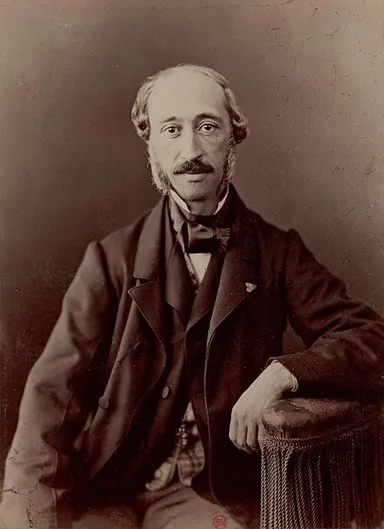
In 1839 the French physicist Edmond Becquerel noticed that an electrolytic cell with two metal electrodes produced more current when exposed to light, the first observation of the photovoltaic effect (DOE solar timeline). In 1876 William Grylls Adams and his student Richard Evans Day showed that selenium generated electricity under light with no heat or moving parts, publishing the work in the Philosophical Transactions of the Royal Society (Adams & Day, 1877). American inventor Charles Fritts then described the first selenium solar cells in 1883 (Fritts, 1883); they were far too inefficient to power equipment.
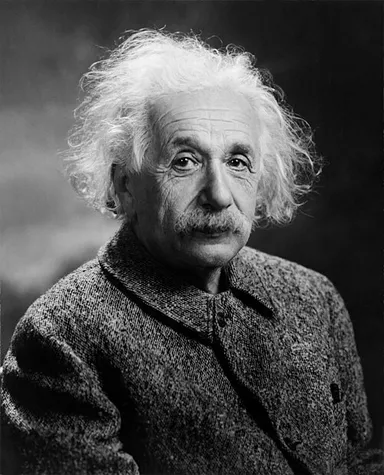
The theory came later. Albert Einstein’s 1905 paper on light quanta explained the photoelectric effect (Einstein, 1905), and the 1921 Nobel Prize in Physics cited “his discovery of the law of the photoelectric effect.” The breakthrough device arrived on April 25, 1954, when Bell Labs announced a silicon solar cell by Daryl Chapin, Calvin Fuller and Gerald Pearson that was about 6% efficient (APS News; Chapin et al., 1954).
Space gave PV its first real market: Vanguard 1, launched in 1958, used a small solar array (under one watt) to power its radio (DOE). On the ground, price was the barrier. Our World in Data puts average module prices at about $132 per watt in 1975 and $0.27 per watt in 2024, both in 2024 dollars (Our World in Data), a fall of more than 99%.
| Year | Milestone | Source |
|---|---|---|
| 1839 | Edmond Becquerel observes the photovoltaic effect in an electrolytic cell | DOE |
| 1876 | Adams and Day show selenium makes electricity from light (published 1877) | Phil. Trans. R. Soc. |
| 1883 | Charles Fritts describes the first selenium solar cells | Am. J. Sci. |
| 1905 | Einstein explains the photoelectric effect | Annalen der Physik |
| 1921 | Einstein receives the Nobel Prize in Physics, citing the photoelectric effect | Nobel Prize |
| 1954 | Bell Labs announces the first practical silicon solar cell (about 6%) | APS |
| 1958 | Vanguard 1 flies a solar array in orbit | NASA |
| 1978 | NASA installs a 3.5 kW PV system on the Papago reservation in Arizona, the first village PV system | DOE |
| 1982 | First megawatt-scale PV plant (1 MW, ARCO Solar) in Hesperia, California; DOE’s 10 MW Solar One power tower begins operating | DOE |
| 2024 | Average module prices reach about $0.27/W | Our World in Data |
Scientific references
- Adams, W. G. & Day, R. E. (1877). “The action of light on selenium.” Philosophical Transactions of the Royal Society of London, 167, 313–349. doi:10.1098/rstl.1877.0009
- Fritts, C. E. (1883). “On a new form of selenium cell, and some electrical discoveries made by its use.” American Journal of Science, s3-26(156), 465–472. doi:10.2475/ajs.s3-26.156.465
- Einstein, A. (1905). “Über einen die Erzeugung und Verwandlung des Lichtes betreffenden heuristischen Gesichtspunkt.” Annalen der Physik, 322(6), 132–148. doi:10.1002/andp.19053220607
- Chapin, D. M., Fuller, C. S. & Pearson, G. L. (1954). “A new silicon p-n junction photocell for converting solar radiation into electrical power.” Journal of Applied Physics, 25(5), 676–677. doi:10.1063/1.1721711
- Shockley, W. & Queisser, H. J. (1961). “Detailed balance limit of efficiency of p-n junction solar cells.” Journal of Applied Physics, 32(3), 510–519. doi:10.1063/1.1736034
Bottom line
Solar energy turns sunlight into electricity with PV panels or into heat with solar thermal and CSP systems. It made about 7% of US utility-scale electricity in 2025, global solar output rose 30% that year, and new utility solar costs about $0.043/kWh worldwide. For a home, the numbers that matter are your annual kWh, local sun hours and installed price per watt. Start with the solar panel calculator to see what a system would look like on your roof.
FAQ
Frequently asked questions
How does solar energy work in simple terms?
Sunlight is made of tiny packets of energy called photons. When photons hit a solar cell made of silicon, they knock electrons loose, and an electric field built into the cell pushes those electrons into a wire as direct current. An inverter converts that DC into the AC electricity your home uses. Solar thermal systems instead absorb sunlight as heat.
What is the difference between solar energy and solar power?
Solar energy is the broad term for all usable energy from the sun, including light and heat. Solar power usually means electricity made from sunlight, either with photovoltaic panels or concentrating solar power plants. In everyday use the two terms are often interchangeable, and both appear on search results for rooftop panels.
Do solar panels work on cloudy days?
Yes, but output drops. Clouds scatter sunlight rather than block it entirely, so panels still produce some electricity. The US Department of Energy notes that atmospheric conditions can cut direct beam radiation by about 10% on clear dry days and up to 100% under thick cloud. Annual sun hours, not single days, decide whether solar pays off.
How much does solar cost for a house?
Berkeley Lab's 2026 data update put the median installed price of host-owned US residential solar at 3.60 dollars per watt in 2025, and 3.00 dollars per watt for cash purchases. A 7 kW system at 3.60 dollars per watt would cost about 25,200 dollars before any incentives. Quotes vary widely by state, installer and roof.
What percentage of US electricity comes from solar?
Solar produced about 7% of US utility-scale electricity in 2025, according to the EIA. That figure excludes small-scale rooftop systems under 1 MW, which the EIA estimates generated roughly another 0.09 trillion kWh in 2025. Solar accounted for about 28% of all US renewable electricity that year.
Is solar energy renewable?
Yes. Solar energy is renewable because the sun delivers a new supply of light every day and will keep doing so for billions of years. Solar panels themselves are manufactured products with a limited life, typically warrantied for decades, but the energy source they use does not run out.
What are the two main types of solar energy technology?
The two main types are photovoltaics and solar thermal. Photovoltaic panels turn sunlight directly into electricity using semiconductor cells. Solar thermal systems capture heat, either for hot water and space heating at home or, in concentrating solar power plants, to make steam that drives a turbine. PV is far more common today.
Does solar energy cause pollution?
Solar panels emit no pollution while they operate. Almost all of their footprint comes from mining, manufacturing and transport. The IPCC's review of lifecycle studies gives median emissions of about 41 grams of CO2-equivalent per kWh for rooftop PV and 48 grams for utility-scale PV, compared with about 820 grams for coal and 490 for natural gas.
When was solar energy invented?
There is no single invention date. Edmond Becquerel observed the photovoltaic effect in 1839, Charles Fritts built the first selenium solar cells in 1883, and Bell Labs announced the first practical silicon solar cell, about 6% efficient, on April 25, 1954. Solar arrays first powered a satellite, Vanguard 1, in 1958.
23 Sources
- EIA, Electricity in the United States (2025 data)
- EIA, Electric Power Monthly Table 6.07.B (2025 capacity factors)
- Ember, Global Electricity Review 2026
- Ember, Global Electricity Review 2025 (2024 data)
- IRENA, Renewable Power Generation Costs in 2024
- IRENA 2025 capacity data, reported by pv magazine (2026)
- SEIA/Wood Mackenzie, US Solar Market Insight 2025 Year in Review
- LBNL, U.S. Distributed Solar and Storage: 2026 Data Update (Aug 2026, PDF)
- Lazard LCOE+ 2025, reported by PV Tech
- US DOE, How Does Solar Work?
- US DOE, Solar Radiation Basics
- US DOE (EERE), The History of Solar (timeline)
- APS News, April 25, 1954: Bell Labs Demonstrates the First Practical Silicon Solar Cell (2009)
- NASA NSSDCA, Vanguard 1 (1958-002B)
- Nobel Prize in Physics 1921, Albert Einstein
- Our World in Data, Solar PV module prices (1975–2024)
- Adams & Day (1877), The action of light on selenium, Phil. Trans. R. Soc. 167
- Fritts (1883), On a new form of selenium cell, Am. J. Sci. s3-26
- Einstein (1905), Annalen der Physik 322(6)
- Chapin, Fuller & Pearson (1954), J. Appl. Phys. 25(5)
- Shockley & Queisser (1961), J. Appl. Phys. 32(3)
- IPCC AR5 WGIII Annex III, lifecycle emissions (2014)
- EIA, Today in Energy: US battery storage additions in 2024
Published October 25, 2026 · updated October 25, 2026 by Izhar Ahmad Danish. Part of our renewable energy guide. Found an error? Tell us.