Key numbers
- Wind power formula: P = ½ × ρ × A × v³ × Cp
- Betz limit: no turbine can capture more than 16/27 (59.3%) of the wind's energy
- Doubling wind speed gives 8× the power
- Air density: 1.225 kg/m³ at sea level and 15 °C
On this page
How to use the Wind Turbine Calculator
- 1Enter your numbersFill in rotor diameter (m), wind speed (m/s), power coefficient cp (efficiency) and air density (kg/m³). Every field starts with a typical value you can overwrite.
- 2Check the assumptionsP = ½ρAv³Cp. Cp can never exceed the Betz limit of 0.593; small turbines achieve about 0.25–0.40. Annual energy assumes the speed you enter is the site AVERAGE (Rayleigh distribution). 1 m/s = 2.24 mph.
- 3Read the resultsThe calculator shows power at this wind speed, estimated energy per year (average speed), per month, swept area, power in the wind (before cp) and wind speed in mph, and updates as you type.
- 4Use the resultCompare it with your bill, a quote or a product spec sheet before you buy or install anything.
Results update as you type. Back to the calculator ↑
This wind turbine calculator (also called a wind power or wind energy calculator) estimates how much power a turbine produces at a given wind speed and how much energy it could generate in a year. Enter the rotor diameter, wind speed, power coefficient and air density. It uses the standard wind power formula and shows each step, so you can check a small home turbine’s claims before buying.
How wind turbine power is calculated
The wind power formula is:
P = ½ × ρ × A × v³ × Cp
- ρ (rho) is air density, 1.225 kg/m³ at sea level and 15 °C
- A is the swept area of the rotor, π × (diameter ÷ 2)²
- v is wind speed in meters per second
- Cp is the power coefficient, the share of the wind’s energy the turbine actually captures, capped at the Betz limit of 0.593
The power coefficient is a turbine’s aerodynamic efficiency. The Betz limit is the theoretical maximum of 16/27, about 59.3%, published by Albert Betz in 1920 (Betz, English translation 2013; ECE 333 notes).
For yearly energy, the calculator treats your speed as the site’s average and assumes a Rayleigh distribution of wind speeds. Then the average of v³ is 6/π (about 1.91) times the average speed cubed. Annual kWh = ½ × ρ × A × 1.91 × v³ × Cp × 8,760 ÷ 1,000.
Worked example with the default inputs
Defaults: 3 m rotor, 5 m/s wind, Cp 0.35, air density 1.225 kg/m³.
- Swept area: π × 1.5² = 7.07 m²
- Power in the wind: 0.5 × 1.225 × 7.07 × 5³ = 541 W
- Turbine output: 541 × 0.35 = 189 W
- Annual energy at a 5 m/s average: 3,169 kWh a year, about 264 kWh a month
- 5 m/s = 11.2 mph
Wind turbine power by wind speed
All rows use a 3 m rotor, Cp 0.35 and sea-level air density.
| Wind speed | mph | Power in wind | Turbine output | kWh/year (as average speed) |
|---|---|---|---|---|
| 3 m/s | 6.7 | 117 W | 41 W | 685 |
| 4 m/s | 8.9 | 277 W | 97 W | 1,623 |
| 5 m/s | 11.2 | 541 W | 189 W | 3,169 |
| 6 m/s | 13.4 | 935 W | 327 W | 5,476 |
| 7 m/s | 15.7 | 1,485 W | 520 W | 8,696 |
| 8 m/s | 17.9 | 2,217 W | 776 W | 12,980 |
Going from 4 to 8 m/s multiplies output by 8, the cube law at work. Rotor size matters too: at 5 m/s a 1.5 m rotor gives 47 W and a 5 m rotor gives 526 W, because swept area grows with the square of diameter.
What affects the result
Wind speed. Because of the cube, a site 1 m/s windier can produce far more energy. Measure for a year if you can, at the planned hub height.
Height and obstacles. Wind is slower and more turbulent near the ground and around trees and buildings. Small turbines usually need tall towers well clear of obstacles.
Power coefficient. Small turbines rarely reach the efficiency of large ones. Use the manufacturer’s power curve rather than the rated wattage, which is often quoted at a high wind speed.
Rated power and cut-out. Real turbines stop increasing output above their rated speed and shut down in storms. The annual figure here ignores that cap, so treat it as an upper bound.
Air density. Thinner air at altitude or in heat lowers output. Output scales directly with density, so air 10% thinner gives 10% less power; enter a lower density for a high-altitude site to see the effect.
History of the Betz limit
The cap of 16/27 on the power coefficient is usually credited to the German physicist Albert Betz of Göttingen, who published “Das Maximum der theoretisch möglichen Ausnützung des Windes durch Windmotoren” in Zeitschrift für das gesamte Turbinenwesen in 1920. An English translation appeared in Wind Engineering in 2013 (Betz, 1920/2013).
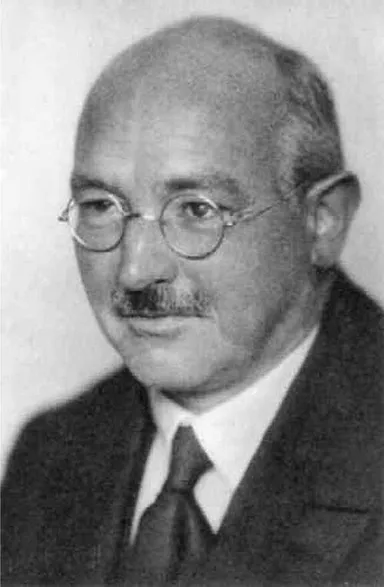
Betz was not alone. The British engineer Frederick Lanchester had derived the same maximum in 1915, and Nikolai Joukowsky of the Russian aerodynamic school derived it in 1920, the same year as Betz. For that reason Gijs van Kuik argued in 2007 that it should be called the Lanchester–Betz–Joukowsky limit (van Kuik, 2007).
| Year | Milestone | Source |
|---|---|---|
| 1915 | Lanchester derives the maximum for an ideal actuator disc | Wind Energy 10:289 |
| 1920 | Betz and Joukowsky publish the 16/27 limit independently | Wind Energy 10:289 |
| 2013 | Betz’s paper translated into English | Wind Engineering 37:441 |
Turning kWh into dollars
At the US residential average of 18.2¢/kWh (EIA, August 2026), 3,169 kWh a year is worth about $577. Check other loads and rates with the kWh calculator and the electricity cost calculator, and compare a rooftop array with the solar panel calculator.
References
- Betz, A. (1920). “Das Maximum der theoretisch möglichen Ausnützung des Windes durch Windmotoren.” Zeitschrift für das gesamte Turbinenwesen, 26, 307–309. English translation: Wind Engineering, 37(4), 441–446 (2013). doi:10.1260/0309-524X.37.4.441
- van Kuik, G. A. M. (2007). “The Lanchester–Betz–Joukowsky limit.” Wind Energy, 10(3), 289–291. doi:10.1002/we.218
Before buying, read our home wind turbine guide for siting, zoning and real-world output, or the broader wind energy guide. Both sit within our coverage of renewable energy sources.
FAQ
Frequently asked questions
What is the wind power formula?
Power from a wind turbine is P = ½ × ρ × A × v³ × Cp, where ρ is air density in kg/m³, A is the swept area in m², v is wind speed in m/s and Cp is the power coefficient. The result is in watts. The cube on wind speed makes speed by far the most important factor.
How much power does a wind turbine produce?
It depends mostly on rotor size and wind speed. A 3 m rotor at 5 m/s with Cp 0.35 makes about 189 W. At 8 m/s the same turbine makes about 776 W. Utility-scale turbines with rotors over 100 m produce megawatts.
What is the Betz limit?
The Betz limit, published by Albert Betz in 1920, says no turbine can extract more than 16/27, about 59.3%, of the kinetic energy in the wind passing through its rotor. The calculator caps the power coefficient at 0.593 for that reason.
What power coefficient should I use?
Use the manufacturer's power curve if you have it. Otherwise 0.35 is a reasonable default for a small turbine. Real machines fall well below the 0.593 Betz limit because of blade drag, tip losses, gearbox and generator losses.
Why is the annual energy higher than power × 8,760 hours?
Wind speed varies, and because power rises with the cube of speed, windy hours add far more energy than calm hours take away. Assuming a Rayleigh distribution, the average of v³ is about 1.91 times the cube of the average speed, so the annual estimate uses that factor.
How many mph is 5 m/s?
One meter per second equals about 2.237 miles per hour, so 5 m/s is about 11.2 mph and 8 m/s is about 17.9 mph. The calculator shows the mph value for whatever speed you enter.
4 Sources
- University of Illinois ECE 333, Limits on Conversion (Betz limit)
- EIA, Electric Power Monthly Table 5.6.A (August 2026)
- Betz (1920, transl. 2013), The Maximum of the Theoretically Possible Exploitation of Wind by Means of a Wind Motor, Wind Engineering 37:441
- van Kuik (2007), The Lanchester–Betz–Joukowsky limit, Wind Energy 10:289
Last updated October 25, 2026. Part of our renewable energy toolkit. Found an error? Tell us.